Landlords: What 8% to 12% Property Management Fees Do to Cash Flow

For long-term residential rentals, property managers most commonly charge about 8% to 12% of collected rent, with 10% being the figure you’ll see most often. Short-term and vacation rentals often run well above that range because of higher turnover and guest services, while large multifamily or commercial properties often land lower thanks to scale. The real cost also depends on whether the fee is billed on collected rent or scheduled rent, and on which add-on fees ride along with it.
TL;DR:
- Check whether fees apply to collected or scheduled rent: collected rent carries no management charge during vacancy, while scheduled rent may still incur one.
- A flat monthly fee may suit properties earning more rent; percentage billing often favors properties with lower rents, where fixed charges take a larger share.
- Compare the full contract, not just its headline rate: leasing, renewal, advertising, onboarding, legal coordination, and maintenance markup can add separate charges.
- Owners with ten or more units may negotiate lower rates, but reduced service can return maintenance scheduling and tenant communication to the owner.
- Before signing a multiyear agreement, confirm whether fees can rise at renewal, require any increase cap in writing, and use renewal to renegotiate.
Table of Contents
- Typical Percentage Ranges by Property Type and Owner Context
- Fee Structures Explained: Percentage, Flat, and Hybrid Models
- Common Additional Fees and How They Affect Your Total Cost
- How Fees Vary by Property Scale and What Drives Lower Percentages
- Worked Examples: Calculate the Management Fee’s Impact on Cash Flow
- Model Fees With Our Calculators to Run Real Scenarios
- Potential Fee Increases Over Contract Terms and Escalation Clauses
- How Management Fee Percentages Affect ROI and Cap Rates
- How Today’s Fee Percentages Compare to Historical Benchmarks
- When I Recommend Hiring a Manager
- Test Your Own Fee Scenarios Before You Sign
- FAQ
- Sources
Typical Percentage Ranges by Property Type and Owner Context
The percentage you pay depends heavily on what kind of property you own and how it’s managed. A single-family home or small multifamily building typically falls in that familiar 8% to 12% band, and most owners should expect to land near the 10% midpoint unless something about the deal pushes the rate up or down.
Large multifamily or commercial assets usually see lower percentage rates because the fixed costs of management spread across more units. A 100-unit apartment complex generates far more revenue per management hour than a single rental home, so managers can afford to charge less per dollar collected.
Short-term and vacation rentals sit at the opposite end. Turnover cleaning, guest communication, dynamic pricing, and constant re-marketing all take more labor per booking than a year-long lease, which pushes fees higher than the long-term residential range.
One detail changes the math more than almost anything else: whether the fee is calculated on collected rent or scheduled rent.
- Collected rent means you only pay the fee on what the tenant actually pays, so a vacant month costs you nothing in management fees.
- Scheduled rent means the fee is based on what the lease says is owed, so you can owe a management fee even during a vacancy.
Fee Structures Explained: Percentage, Flat, and Hybrid Models
Most management agreements use one of three billing structures, and each one shifts the risk differently between you and your manager.
- Percentage of collected rent: the manager’s income rises and falls with occupancy, which usually keeps their incentives aligned with keeping units filled.
- Flat monthly fee: predictable regardless of rent level, which tends to favor owners of higher-rent properties where a flat dollar amount works out to a lower effective percentage.
- Hybrid models: a reduced percentage paired with a one-time leasing or placement fee when a new tenant signs, common for managers who want steady income without fully flat pricing.
Lower-rent properties often do better under percentage-based billing, since a flat fee can eat a disproportionate share of a small rent check.
Common Additional Fees and How They Affect Your Total Cost
The quoted percentage rarely tells the whole story. Several add-on charges show up in most management contracts, and they can meaningfully change your total cost even when the headline rate looks reasonable.
- Leasing or placement fees, often a flat amount or a percentage of the first month’s rent, charged when a new tenant is placed.
- Maintenance markups, where the manager adds a percentage on top of vendor invoices; ask whether there’s a cap.
- Lease renewal fees, charged when an existing tenant signs a new term.
- Advertising and onboarding fees, sometimes bundled into the monthly rate and sometimes billed separately.
- Eviction or legal coordination fees, which can apply even when the manager isn’t the one appearing in court.
Pro Tip: Ask whether the management fee is calculated on collected or scheduled rent before you sign; that single clause can swing your real annual cost by hundreds of dollars.
How Fees Vary by Property Scale and What Drives Lower Percentages
Portfolio size is one of the strongest levers you have for negotiating a lower percentage. A manager handling ten or more units for the same owner can often justify a reduced rate because onboarding, systems, and vendor relationships are already in place.
- Owners with larger portfolios frequently negotiate percentage discounts compared to single-property owners.
- Reduced-service agreements, such as rent collection only with no maintenance coordination, typically come with lower percentages.
- Local market competition and prevailing rent levels influence what managers can charge in a given area.
A lower percentage isn’t always a better deal. Reduced-service contracts shift responsibilities like maintenance scheduling and tenant communication back to you, so weigh the time cost against the fee savings before choosing the cheapest quote.
Worked Examples: Calculate the Management Fee’s Impact on Cash Flow
The basic formula is simple: rent collected multiplied by the fee percentage equals the management fee.
One scenario shows the fee math clearly: an 8% fee on $30,000 in monthly rent works out to $2,400 per month, an example that illustrates how the same percentage produces very different dollar amounts depending on rent level and property scale.
Vacancy changes the picture depending on your billing basis. If your fee is based on collected rent and the unit sits empty for a month, you owe nothing that month. If it’s based on scheduled rent, you may still owe the fee even with no tenant paying.

A simple mini pro forma helps make the tradeoff concrete:
When management fees consistently exceed roughly 10% to 12% of rent on a property with otherwise typical operating expense ratios, it’s worth running the numbers again to see whether the service level justifies the cost.
Model Fees With Our Calculators to Run Real Scenarios
Running the math on paper gets tedious once you start comparing multiple fee structures across several properties. Our rental property calculator lets you plug in rent, vacancy rate, management percentage, and maintenance markup side by side so you can see the net cash flow difference instantly.
- Start with the Rental Property Calculator to model cash flow under different management fee percentages.
- Toggle vacancy rate and collected versus scheduled rent assumptions to see how billing basis changes your actual cost.
- Use the BRRRR tool when you’re evaluating a property you plan to refinance, since management fees affect the hold-period cash flow that feeds your refinance numbers.
- Adjust maintenance markup and leasing fee inputs separately so one hidden cost doesn’t get lost inside the headline percentage.
All of these calculators are free to use with no sign-up required, so you can test a handful of scenarios before you ever talk to a management company.
Potential Fee Increases Over Contract Terms and Escalation Clauses
Most management agreements run for a year or more, and many contracts include language that allows the fee percentage or flat rate to increase at renewal. These escalation clauses are worth reading closely before you sign, not after your first increase notice arrives.
That’s a built-in increase even if the percentage itself never changes.
Separately, some contracts allow the manager to raise the percentage rate itself at renewal, often with 30 to 60 days’ notice. HUD’s management-fee guidance for regulated and assisted properties describes structured procedures for adjusting management fee percentages when rents change, which gives a useful model for the kind of clause language to look for even outside regulated housing.
Before signing a multi-year agreement, ask directly whether the percentage is locked for the full term or subject to annual review. If there’s an escalation clause, get the cap in writing. A contract that allows unlimited increases at the manager’s discretion gives you far less predictability than one that caps annual increases at a fixed amount or ties them strictly to documented cost increases.
Renewal time is also your best leverage point to renegotiate downward, especially if your portfolio has grown or your occupancy history gives the manager a reason to want to keep your business.

How Management Fee Percentages Affect ROI and Cap Rates
Management fees come straight out of net operating income, which means they directly affect your cap rate calculation.
That $2,400 reduction lowers your net operating income, and since cap rate equals net operating income divided by property value, a higher management fee percentage mechanically produces a lower cap rate on the exact same property and purchase price. Two identical properties with different management fee structures will show different returns on paper even though nothing about the physical asset changed.
The effect compounds over a multi-year hold. A percentage point or two in management fees might look minor on a monthly statement, but across a ten-year hold period it represents a meaningful chunk of total cash flow, particularly on lower-rent properties where fixed costs already eat a larger share of revenue.
This is why modeling the fee percentage explicitly, rather than treating it as a rounding error, matters when you’re comparing deals or deciding between self-managing and hiring a manager. Our rental analysis guide walks through how cap rate, cash flow, and the 1% rule interact, and management fees are one of the inputs that moves all three at once.
How Today’s Fee Percentages Compare to Historical Benchmarks
The 8% to 12% range for long-term residential management has held fairly steady as the industry’s reference point for years, and it remains the figure cited across industry breakdowns of typical fee structures. That consistency makes it a useful anchor when you’re evaluating a quote, since a number significantly outside that band deserves an explanation.
What has shifted more than the headline percentage is the prevalence of add-on fees layered on top of it.
Regional variation also plays a bigger role than it once did. High-demand urban markets with tighter rental supply sometimes support lower percentage rates because turnover is faster and vacancy risk is lower, while rural or lower-demand markets sometimes see higher percentages to compensate for longer vacancy periods and thinner tenant pools.
The takeaway for comparing a quote against the broader market isn’t just checking whether the percentage sits inside the historical range. It’s confirming what that percentage actually includes, since the benchmark itself has stayed fairly constant while the fee schedules wrapped around it have grown more layered.
When I Recommend Hiring a Manager
Hiring a manager tends to make the most sense when you’re short on time, live far from the property, or hold enough units that self-managing becomes a part-time job you didn’t sign up for. Owners with one or two nearby properties and some spare time often do fine self-managing, at least until the portfolio grows. Either way, run the fee math first instead of guessing.
— Michael
Test Your Own Fee Scenarios Before You Sign
Every percentage and fee structure in this guide is a starting point, not your actual number.
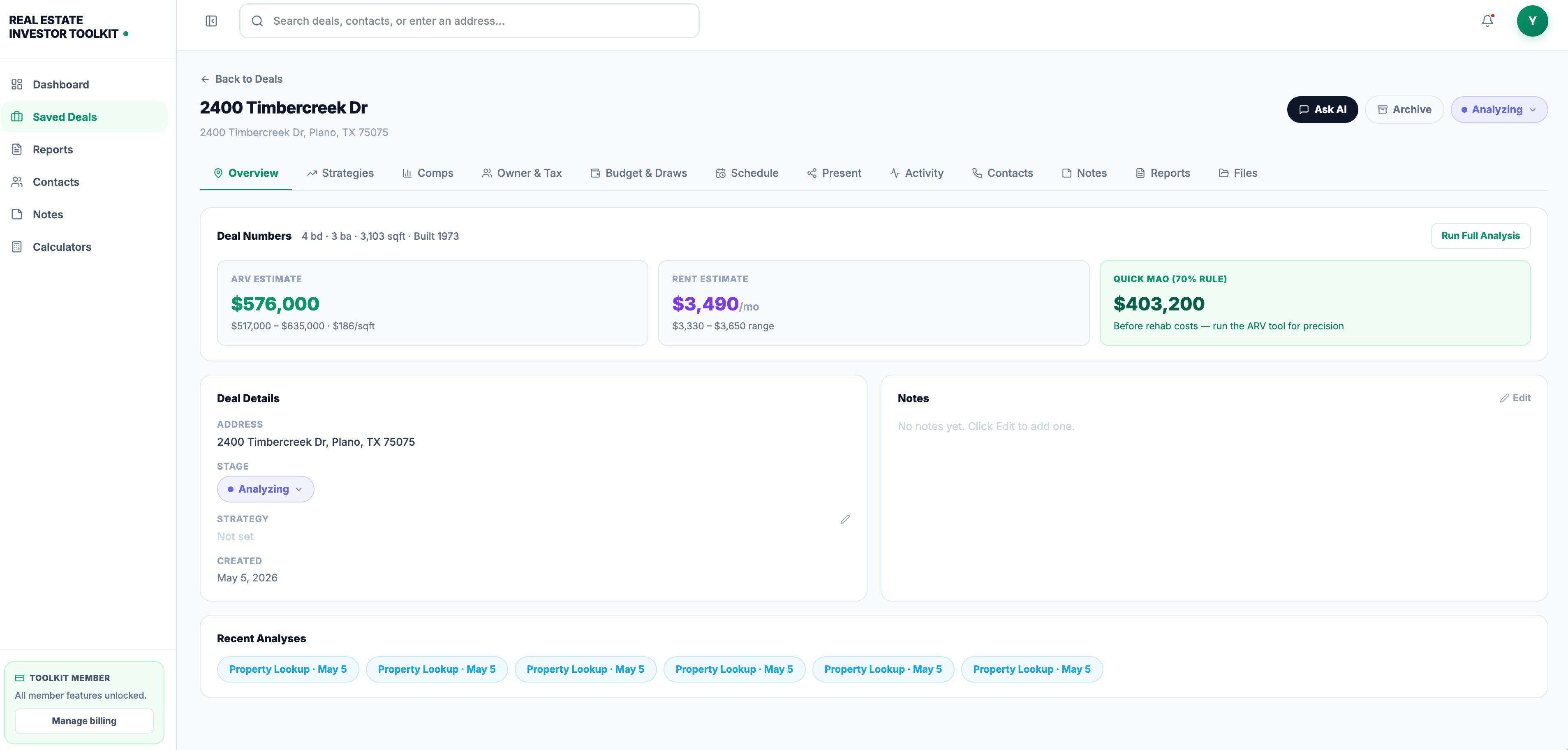
- Our Rental Property Calculator lets you compare management fee percentages side by side without creating an account.
- You can toggle vacancy rate, maintenance markup, and leasing fees separately to see which line item actually drives your cost.
- When you want saved scenarios, unlimited property reports, and deeper market data, our Real Estate Investor Toolkit plan unlocks those features for $39.99 per month.
Start with the free tools and model one property tonight. Once you can see the exact dollar gap between fee structures, choosing a manager stops being a guessing game.
This article is general information, not a substitute for advice from a qualified financial advisor. Consult a qualified financial professional about your own circumstances before acting on anything here.
FAQ
Is a 0.25% management fee high for a rental property?
A 0.25% fee would be unusually low for standard percentage-based rental management, since typical rates run between 8% and 12% of collected rent.
What percentage do most property management companies charge?
Most property management companies charge between 8% and 12% of collected monthly rent for long-term residential properties, with 10% being the most commonly cited figure. Large multifamily or commercial properties often see lower percentages due to economies of scale, while short-term rentals typically run higher.
What is the 2% rule for rental properties?
It’s a rough filter for comparing deals quickly, not a guarantee of profitability, and it doesn’t account for financing, taxes, or management fees.
What does the 80/20 rule mean in property management?
In property management, a common idea is that a large share of maintenance issues, tenant complaints, or management time comes from a small share of units or tenants. This serves as a planning heuristic to flag where to focus attention rather than a fixed statistic from a specific study.
Are property management fees tax deductible?
Yes, property management fees are deductible as an ordinary and necessary rental expense according to IRS guidance, as long as you keep records to support the deduction on Schedule E. IRS Topic No. 414 confirms that management fees fall under the broader category of deductible expenses for managing rental property.
Sources
The figures and tax guidance in this guide come from primary government sources and a widely cited industry explainer, so you can verify the details yourself before making a decision. IRS Publication 527 covers residential rental property rules, including which expenses, management fees among them, qualify as deductible under ordinary and necessary rental expense rules. IRS Topic No. 414 summarizes rental income and deductible expense categories more broadly, including the limitations that can apply.
For regulated and HUD-assisted properties, HUD’s management-fee guidance lays out structured percentage and per-unit-per-month calculation methods along with procedures for adjusting fees when rents change, useful context even for owners outside regulated housing who want to understand how formal fee-adjustment language is typically written. For the percentage ranges and fee-structure breakdowns referenced throughout this guide, The Balance’s breakdown of property management fees remains one of the more detailed industry explainers available, including the worked example showing how an 8% fee applies to a specific monthly rent figure. If you manage a budgeting process around these costs, the property management budget guide from our partners at Ardor CRE offers additional checklists for forecasting these expenses across a portfolio.
- Publication 527 (2025), Residential Rental Property | Internal Revenue Service
- A Breakdown of Property Management Fees | The Balance
- HUD management-fee guidance (Handbook excerpt) | HUD