Rental Deals Can Pass the 1 Percent Rule, Then Fail the 45% Rule

The 1 percent rule is a quick way to screen a rental by comparing its monthly rent with its purchase price. Use it as a quick first filter on listings, not as a final verdict. A pass tells you a deal deserves full underwriting, and a fail tells you to move on or look for another path to profit. Below, we show the math, the limits, and a checklist.
TL;DR:
- Use total acquisition cost, including closing costs and immediate repairs, when evaluating fixer uppers; this prevents an artificially favorable rent to price ratio.
- Estimate rent from nearby comparable rentals and reduce it for vacancy; HUD reported a 7.5% national apartment vacancy rate in 2023.
- Budget about 45% of gross rent for operating costs, then test income against your mortgage and compare annual cash flow with cash invested.
- Reserve the 2% threshold for certain low priced markets, and assess expensive markets through appreciation or value add only when those strategies support the deal.
Table of Contents
- What is the 1 percent rule and how do you calculate it?
- How do investors use the 1 percent rule to screen deals?
- Where does the 1 percent rule fall short?
- Which metrics should you pair with the 1 percent rule?
- How do you apply the 1 percent rule to a live listing?
- When I use the 1 percent rule, and when I ignore it
- Turn your 1 percent screen into real numbers with our free calculators
- FAQ
- Sources
What is the 1 percent rule and how do you calculate it?
The formula is simple: monthly rent ÷ purchase price ≥ 1%. If the result is 0.01 or higher, the property passes the screen.
- Passing example: A property whose rent meets the rule’s threshold passes the screen.
- Failing example: A property whose rent falls short of the rule’s threshold fails the screen.
- Which price to use: Many investors start with the list or contract price. A stricter version uses total acquisition cost, meaning price plus closing costs and immediate repairs, which keeps a fixer from looking better than it is.
- The stricter cousin: The 2% rule asks for monthly rent of at least 2% of price. SmartAsset describes it as a more conservative cash-flow screen for certain markets.
One note on the name: the phrase also shows up in internet-culture research on participation inequality, which has nothing to do with rentals. Here we mean only the rent-to-price test.
How do investors use the 1 percent rule to screen deals?
Think of the rule as a sieve. When you scan listings or an alert export, you can compute the ratio in seconds and skip full models on weak deals. A pass means run complete underwriting. A fail means either move on or model a value-add or appreciation story deliberately, with eyes open.
Here is the workflow most investors follow:
- Pull the asking price from the listing.
- Estimate market rent from nearby rentals. Our guide on analyzing rental comps walks through setting a defensible number.
- Divide rent by price and compare the result to 1%.
- Decide: underwrite the passes, and give the fails a hard look before discarding them.
Rent context matters before you trust any ratio. HUD’s national housing analysis reports a 7.5% apartment vacancy rate in 2023, alongside modest rent growth. In plain terms, the rent on your spreadsheet is not the rent you will collect every month, so haircut it.
Where does the 1 percent rule fall short?
A rule built on two numbers will miss a lot. These are the blind spots to check before you trust a pass or dismiss a fail:
- Market dependence: In high-cost markets, nearly every property fails the screen, yet some still work through appreciation or heavy value-add. In very cheap markets, a pass can hide poor tenants or neighborhoods in decline.
- Expenses: Rent is revenue, not profit. Taxes, insurance, repairs, vacancy, and management take a large bite, and the 45% benchmark in the next section puts a number on it.
- Vacancy and turnover: Empty months and make-ready costs shrink effective rent. Assume more vacancy than feels comfortable.
- Financing: The ratio ignores your loan. A larger down payment can help a property with a thin ratio, while a high rate can make one that passes less viable.
HUD’s technical guidance makes the same point: it shows how expense ratios change the gross rent you need to reach a target net return, and it advises testing rentals against both expense and mortgage constraints.
Pro Tip: Always turn the 1% result into a rough monthly cash-flow estimate before you decide anything.

Which metrics should you pair with the 1 percent rule?
No single metric tells the whole story. These fill in what the rent-to-price ratio leaves out:
- The 45% rule: Roughly 45% of gross rent commonly goes to non-mortgage operating costs such as insurance, taxes, repairs, vacancy, and management, according to The White Coat Investor. Some investors use 55% to be safer. Our write-up on operating expense benchmarks goes deeper.
- Cap rate: Net operating income divided by price. Compare it with local market cap rates to judge whether you are paying a fair price for the income.
- Cash-on-cash return: Annual pre-tax cash flow divided by the cash you actually invested. Use it once financing enters the picture.
- Gross rent multiplier (GRM): Price divided by annual gross rent. It is another fast check that works alongside rent-to-price screening.
- The 2% rule: A stricter screen, mostly relevant in low-priced markets or for investors chasing maximum cash flow.
How do you apply the 1 percent rule to a live listing?
Follow these steps in order, and you will turn a quick screen into a decision:
- Pick the price basis. Use purchase price, or total acquisition cost if repairs and closing costs are significant.
- Estimate realistic rent. Use comps, then adjust for vacancy. A good rent estimate matters more than any ratio.
- Run the ratio. Divide monthly rent by price and note whether you land above or below 1%.
- Apply expenses. Subtract roughly 45% of gross rent for operating costs, then test your mortgage payment against what is left. Tracking real spending helps here, and bookkeeping for rental property owners is a useful reference for keeping those assumptions honest.
- Decide. Build a full pro forma only for deals that pass, or that have a clear value-add or financing path. Our guide to analyzing a rental property covers that next stage.
Pro Tip: Use a no-sign-up rental calculator to test several mortgage scenarios in a few minutes, so a single rate or down payment doesn’t decide the deal for you.
When I use the 1 percent rule, and when I ignore it
I lean on the rule for small single-family rentals in lower-cost markets, where rent-to-price ratios are tight and a quick screen saves hours. I ignore it for heavy value-add projects and for markets where appreciation is the real thesis, because a cheap ratio there can be a feature, not a flaw. In every case, your risk appetite and financing assumptions decide the outcome more than any rule of thumb. When a deal passes, I run it through a calculator rather than trusting my gut.
— Michael
Turn your 1 percent screen into real numbers with our free calculators
A ratio tells you a deal is worth a look. Cash flow tells you whether to buy. That is the gap we built our tools to close, and you can start without creating an account.
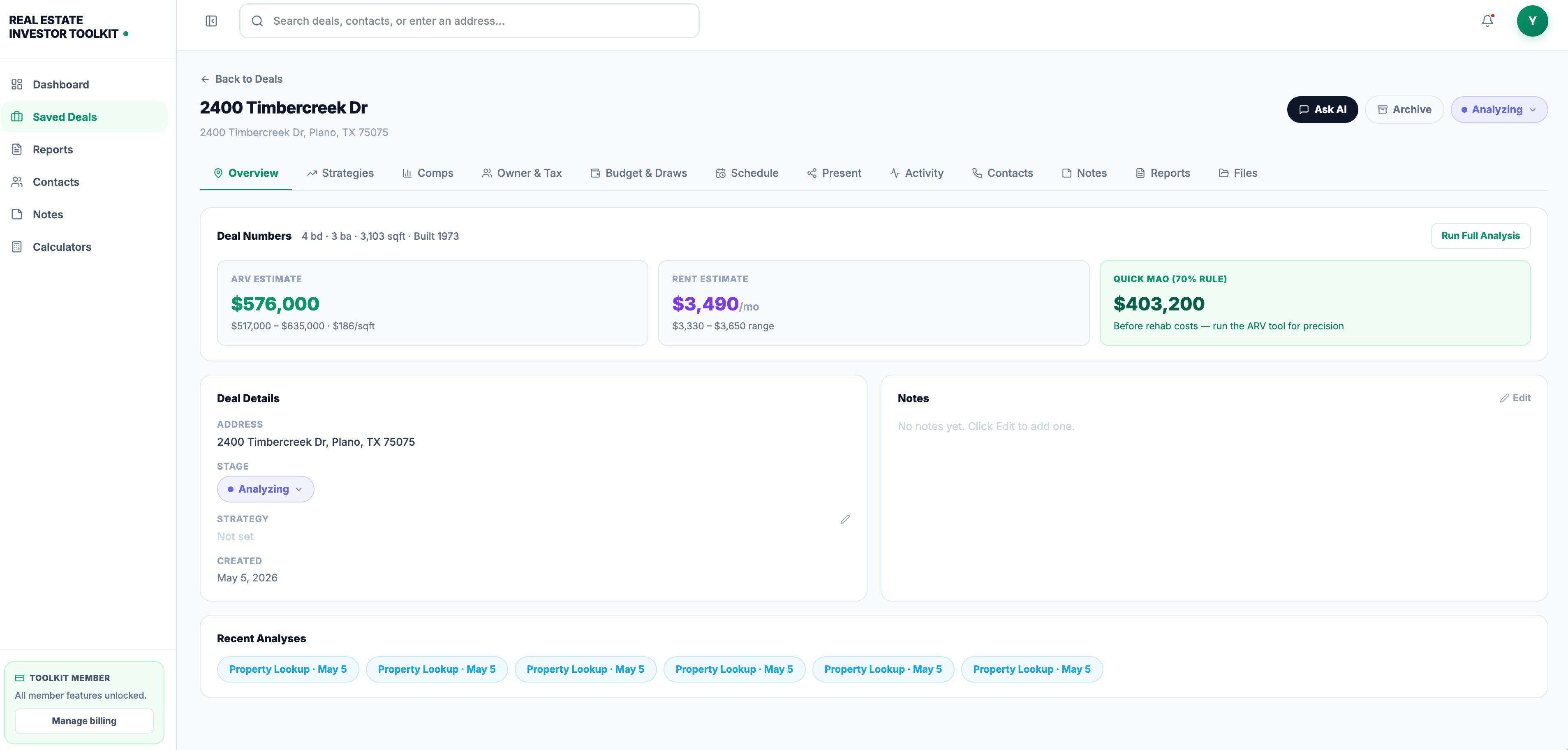
- Our rental property calculator turns rent, price, expenses, and financing into cash flow, cap rate, and return numbers.
- Our ARV and rehab tools help you size up value-add deals that fail the 1% screen.
- Our BRRRR calculator models buy, rehab, rent, refinance, and repeat scenarios.
The free tools work without signup for quick checks. When you want saved deal pipelines, unlimited reports, and deeper property data, the Real Estate Investor Toolkit plan costs $39.99 per month. Your next step is simple: take the numbers from the listing in front of you, plug them into the rental calculator, and compare a few scenarios side by side.
FAQ
Is the 1 percent rule still realistic today?
In many markets, it is hard to meet, especially where prices have outrun rents. It still works as a screen in lower-cost areas, and elsewhere it is a reference point rather than a pass-or-fail test.
What is the 2 percent rule in real estate?
It is a stricter version of the 1 percent rule, asking for monthly rent of at least 2% of the purchase price. SmartAsset notes it is a more conservative cash-flow screen that fits only certain markets.
Does passing the 1 percent rule guarantee positive cash flow?
No. A pass only says rent is large relative to price. Operating expenses, vacancy, and your mortgage terms decide what you actually keep each month.
What is the 45 percent rule?
The White Coat Investor presents it, along with a more cautious 55% version, to pair with the 1% screen.