Rental Stress Test for Investors: Run Fast With No Signup Calculators

A rental stress test is a scenario-based cash-flow and financing analysis that checks whether a rental property survives a rent decline, vacancy spike, expense jump, or interest-rate shock, not just whether it looks good on a single optimistic forecast. The immediate step is to build base, downside, and upside scenarios with editable assumptions, then report investor cash flow separately from depreciation and other tax effects.
TL;DR:
- Rent decline and vacancy spikes can critically impact cash flow, so stress tests should include rent and vacancy scenarios with detailed lease-by-lease modeling.
- Operating expenses must be broken down into specific categories with documented sources; generic expense assumptions undermine stress test accuracy.
- Sensitivity analysis should test key variables such as rent growth, vacancy rates, interest rates, and expenses, with attention to how debt structure affects cash flow under stress.
- Outputs like investor cash flow, debt coverage ratio, and owner contribution requirements reveal whether a property can withstand downturns or needs additional owner funding.
- Using a layered calculator or re-running scenarios at closing and refinance helps account for shifting market conditions, maintaining realistic underwriting.
Table of Contents
- What line items does a rental stress test need?
- How do you build scenarios and run sensitivity analysis?
- What outputs should a rental stress test report?
- How do you validate the assumptions behind the numbers?
- How do you run this stress test with a calculator instead of a spreadsheet?
- Why conservative underwriting matters more than a clean IRR
- Run your own rental stress test today
- FAQ
- Sources
What line items does a rental stress test need?
Before you run a single scenario, gather every input the model needs so you aren’t hiding assumptions behind a single “expenses” line. A stress test is only as honest as the detail behind it.
- Income: contract rent, projected market rent, and other income such as parking or laundry fees
- Vacancy and credit loss: modeled lease by lease, since a single portfolio-wide vacancy rate can mask unit-level risk
- Operating expenses: property taxes, insurance, utilities, management fees, maintenance, repairs, turnover costs, and advertising, categories that mirror the checklist in IRS Publication 527
- Financing terms: loan amount, interest rate, amortization schedule, fees, and whether any portion of the loan is interest-only
- Capital items and reserves: the rehab schedule, replacement reserves, and the timing of major capex like roofs and HVAC systems
- Source documentation: which comparable properties you pulled expenses from, how old that data is, and what trend adjustment you applied, a step HUD’s underwriting guidance treats as non-negotiable
Skip any of these and the stress test quietly becomes a best-case forecast wearing a disguise.
How do you build scenarios and run sensitivity analysis?
Once your inputs are documented, the work shifts to structure. A stress test needs at least three scenarios and a way to see what happens when you push on any single variable.
- Define base, downside, and upside cases. Pick the two or three variables most likely to move: rent growth or decline, vacancy rate, expense inflation, and an interest-rate shock on any variable-rate debt.
- Build the model in layers. Start with effective gross income, subtract operating expenses to get net operating income (NOI), subtract debt service and scheduled capex, and arrive at investor cash flow. Keeping these layers visible, rather than folding debt or capex into NOI, is a standard taught in real-estate investment modeling coursework at Cornell.
- Run one-way and two-way sensitivity tables. Vary rent and vacancy together, or expenses and interest rate together, to find the breakpoint where investor cash flow turns negative.
- Compare debt structures. A fixed-rate loan, an adjustable-rate loan, and an interest-only period produce different cash-flow paths under the same downside case, a point MIT’s real estate finance coursework emphasizes when separating unlevered NOI from levered investor cash flow.
A common downside case stress-tests a moderate rent cut alongside a projected vacancy increase and an interest rate bump on variable debt, then checks whether the property still covers debt service without an owner contribution.
Pro Tip: Run the stress test again right before closing and before any refinance, since rates and comps can shift enough between offer and close to change the answer.
What outputs should a rental stress test report?
Every scenario should produce the same set of numbers so you can compare base, downside, and upside side by side.
- Monthly and annual investor cash flow, the number left after debt service and scheduled reserves
- NOI, which measures operating performance before financing decisions touch it
- Debt service coverage ratio, showing how much cushion exists between NOI and loan payments
- Cash-on-cash return, calculated against your actual cash invested
- Breakeven occupancy, the vacancy level at which cash flow hits zero
- Owner required contribution, the dollar amount you’d need to inject to keep the property current under the downside case
NOI tells you how the property performs before financing. Property before-tax cash flow adds back the effect of debt and capex timing, but investor cash flow, what actually lands in your account after debt service and reserves, is the number that determines whether you survive a downturn. MIT’s coursework on real estate finance draws this distinction specifically because financing choices change what reaches equity, even when NOI stays identical across two deals.
A useful reserve benchmark: plan replacement reserves of at least 1% to 2% of property value annually, modeled as a scheduled cash outflow rather than buried inside a generic expense ratio. That single line item often separates a deal that survives a downside scenario from one that doesn’t.
Use these outputs to set a minimum acceptable cash-on-cash return, a survival horizon (how many months of negative cash flow you can absorb), and a ceiling on the owner contribution you’re willing to fund before walking away.

How do you validate the assumptions behind the numbers?
A stress test is only trustworthy if the assumptions feeding it reflect the specific property, not a citywide average.
- Check expenses and rents against comparable properties, then adjust for differences in climate, labor costs, materials, design, and local management practices, exactly the adjustment process HUD’s operating expense guidance requires before trusting any comp.
- Date every input. Note when each comp or expense figure was pulled and apply a trend adjustment if the data is more than a year old.
- Separate cash items from noncash items. Depreciation is a tax deduction, not a cash outflow, and IRS Publication 527 treats it as its own category precisely because mixing it into operating cash flow overstates how much cushion you actually have.
- Watch for the usual traps: no reserve for replacement, an optimistic vacancy assumption carried over from a seller’s pro forma, or debt risk folded into NOI instead of shown as its own line.
Our guide on rental cash-flow analysis and capex reserves walks through reserve sizing in more detail, and our breakdown of operating expense ratio benchmarks is a useful cross-check against whatever expense percentage a seller hands you. If you’re underwriting a property with third-party management, this property management guide is worth reviewing before you lock in a management-fee assumption.
How do you run this stress test with a calculator instead of a spreadsheet?
A spreadsheet works, but it’s slow to rebuild for every deal and easy to get wrong when a formula references the wrong cell. A layered calculator fixes both problems.
- Gather your line items using the checklist above: rent, vacancy, expenses, financing terms, and capex schedule.
- Enter them into a rental cash-flow calculator built in layers, so NOI, debt service, and investor cash flow stay visible as separate numbers rather than one blended figure.
- Run base, downside, and upside scenarios by editing the vacancy, rent, and interest-rate assumptions and watching how cash-on-cash and breakeven occupancy move.
- Export the scenario table and a one-page summary to share with a partner or lender.
Specialized calculators for rental cash flow, rehab costs, and financing reduce the kind of formula errors that creep into ad-hoc spreadsheets, since each tool is built around the specific inputs that category of deal requires rather than a generic template stretched to fit. Save each scenario set with a short note on where each assumption came from.
Why conservative underwriting matters more than a clean IRR
A deal that only works in the base case isn’t a deal, it’s a bet. We’d rather see a property clear its downside scenario with a modest but real cash-on-cash return than post an attractive IRR that assumes nothing ever goes wrong. Run the stress test at the time of your offer, then again before closing and before any refinance, since rates and comps shift. Using layered calculators to rerun these scenarios keeps that discipline fast enough to actually practice on every deal.
— Michael
Run your own rental stress test today
Our free calculators let you build base, downside, and upside scenarios without creating an account first. Every assumption, rent, vacancy, financing terms, is editable, and you can export the scenario table to share with a partner or lender. Start with our rental property calculator for cash flow and cap rate, layer in the rehab cost calculator if the deal needs work, and check refinance sensitivity with our BRRRR calculator before you commit.
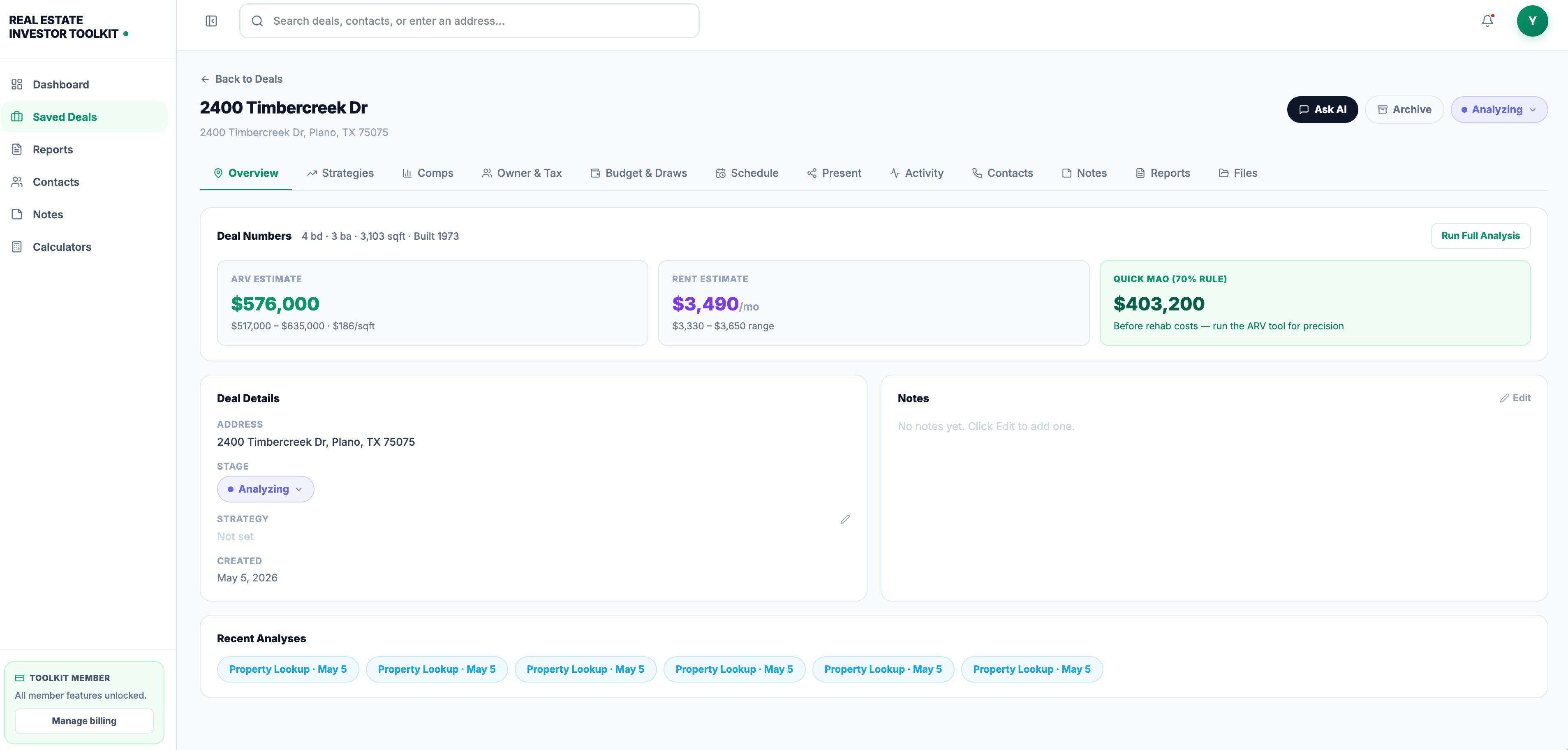
Run the checklist once, save it as a template, and you’ll cut the time a full stress test takes on your next deal by reusing the same structure with new numbers.
FAQ
What’s the difference between a rental stress test and a basic cash-flow projection?
A basic projection usually shows one forecast built on optimistic assumptions. A rental stress test runs that same property through base, downside, and upside scenarios, varying rent, vacancy, expenses, and financing terms to see whether cash flow survives a downturn, not just whether it looks good on paper.
How many scenarios should I run for each property?
Three is the practical minimum: base, downside, and upside, each with its own rent, vacancy, and expense assumptions. Adding a one-way or two-way sensitivity table on top of those three scenarios helps you find the exact point where cash flow turns negative.
Should depreciation be included in a rental stress test?
No, depreciation is a noncash tax deduction and belongs in a separate tax analysis rather than your cash-flow stress test, a distinction IRS Publication 527 draws explicitly. Mixing it into operating cash flow overstates how much cash cushion the property actually has during a downturn.
What reserve amount should I use when stress testing a rental property?
A common starting benchmark is 1% to 2% of property value annually for replacement reserves, modeled as a scheduled cash outflow rather than folded into a general expense ratio. Adjust upward for older properties or ones with deferred maintenance.
Can I run a rental stress test without signing up for software?
Yes, our free rental property calculator requires no signup and lets you build base, downside, and upside scenarios directly, with editable assumptions you can export for a partner or lender.
Sources
- Publication 527 (2025), Residential Rental Property | Internal Revenue Service
- Real Estate Investment Modeling - eCornell
- Chapter 11 lecture — MIT OpenCourseWare (Real Estate Finance)
- HUD, 4465.1 CHG: Chapter 6 — Operating expense estimates