Rent Gap Payback: Rent Ready vs Full Rehab for Investors
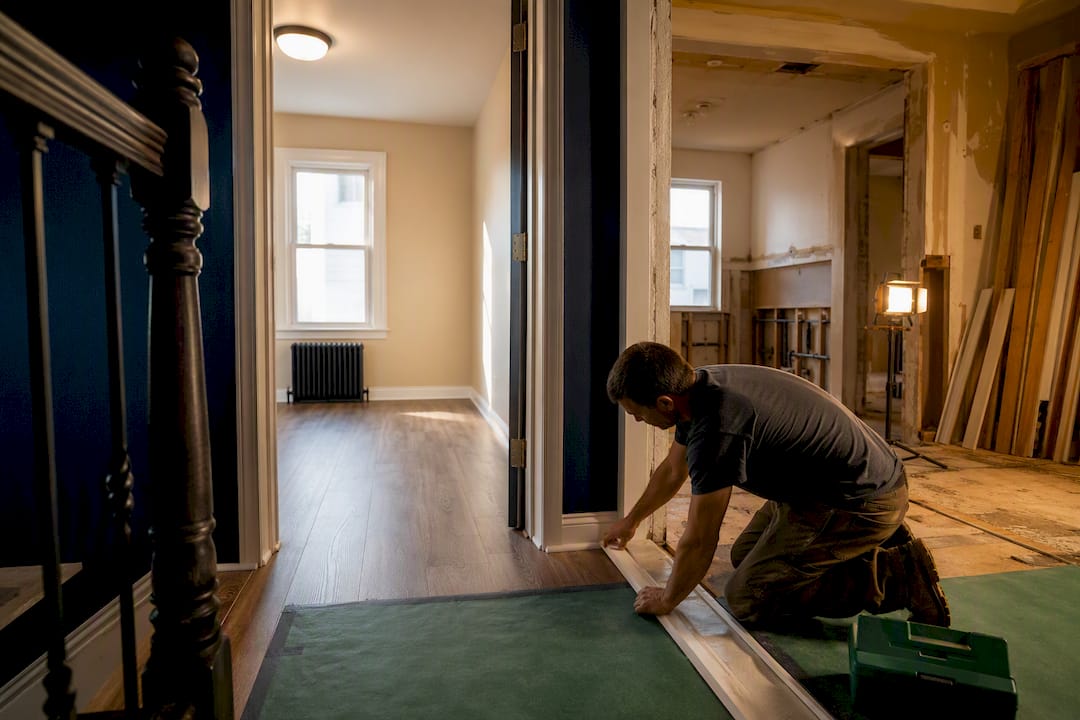
Choose rent-ready when you need cash flow fast and your rehab budget is tight; choose a full rehab when the property lets you push After Repair Value high enough to justify months of work and a bigger loan. The right call comes down to one calculation: does the rent premium you’d earn actually pay back the extra money and time a heavier scope demands?
TL;DR:
- Rent-ready improvements typically cost between $1,500 and $18,000, providing a quick return of under two years based on rent increases.
- Full rehabs can range from $20,000 to over $150,000 and take two to six months, with a significantly longer payback period unless refinancing is planned.
- The rent gap must justify the rehab scope, with small upgrades often paying back faster than large-scale renovations that only lead to extended payback periods.
- Over-improving for the neighborhood or underestimating contingency costs in full rehabs can lead to budget overruns and reduced profitability.
- Using free online calculators to model costs and rent increases helps investors determine whether a rent-ready or full rehab approach aligns with their exit strategy.
Table of Contents
- Rent Ready vs Full Rehab: What Each Term Actually Means
- What Rent Ready and Full Rehab Actually Cost
- Running the Rent-Gap Payback Test
- Step-by-Step Checklists for Each Path
- Financing and Program Rules That Shape the Decision
- How Rehab Scope Moves Property Value
- Where Each Approach Can Go Wrong
- Two Scenarios, Two Very Different Outcomes
- What Happens to Maintenance After You’re Done
- What Tenants Actually Expect From Each Condition
- Three Things Experienced Investors Watch For
- Try the Calculators Before You Commit to a Scope
- Sources
Rent Ready vs Full Rehab: What Each Term Actually Means
Investors throw around “make-ready,” “rent-ready,” and “full rehab” like they’re interchangeable. They’re not, and mixing them up on a deal call is how you underbid a property or overpay for one.
Make-ready is the bare minimum between tenants: a deep clean, a patch-and-paint job, maybe a lock rekey. It’s turnover work, not renovation, and it usually runs a few hundred to a couple thousand dollars.
Rent-ready goes a step further. The unit meets legal habitability standards and looks presentable enough to list, but you’re not upgrading finishes for the sake of it. Think fresh paint throughout, working appliances, functional plumbing and electrical, and maybe new flooring in one or two rooms. This is light rehab territory.
Full rehab, sometimes called a gut rehab, means you’re touching structural elements or major systems: roof, HVAC, electrical panel, plumbing lines, load-bearing walls, sometimes a full kitchen and bathroom reconfiguration. This is medium to heavy rehab, and it changes the property’s category, not just its condition.
A quick way to sort a listing or inspection report into the right bucket:
- Light (rent-ready): paint, carpet or LVP in select rooms, fixture and hardware swaps, appliance repair or replacement, minor drywall patching.
- Medium: kitchen refresh (cabinets refaced, countertops replaced, new appliances), bathroom vanity and fixture updates, window replacement.
- Heavy (full rehab): foundation or structural repair, full electrical or plumbing re-pipe, roof replacement, HVAC system replacement, full gut of kitchen and baths down to the studs.
Knowing which bucket you’re in before you make an offer changes everything downstream, from financing to your rehab cost estimate.
What Rent Ready and Full Rehab Actually Cost
The gap between these two paths isn’t incremental. It’s the difference between a weekend project and a second mortgage.
Getting a single-family unit rent-ready for its first tenant typically runs $1,500 to $5,000, and that number climbs if you’re replacing flooring throughout or dealing with a unit that’s been neglected for years. A professional deep clean alone runs $300 to $600. A full interior repaint lands between $1,500 and $3,500. Luxury vinyl plank installation adds $3 to $7 per square foot if you’re doing more than a patch job.
Full rehabs live in a different universe. Industry data puts a typical full rehab at $20,000 to $75,000, or roughly $20 to $50 per square foot for a whole-house remodel. A complete gut renovation, the kind where you’re down to studs and subfloor, can run $60 to $150+ per square foot. High-end kitchen and bathroom work alone often hits $100 to $250 per square foot.
Cost snapshot: Rent-ready work generally lands between $1,500 and $18,000 depending on scope creep. Full rehabs range from $20,000 on the low end to $150,000 or more for a total gut, with per-square-foot costs telling you more than a flat number ever will.
Timelines diverge just as sharply:
- Rent-ready: 1 to 4 weeks, assuming no permit requirements and available contractors.
- Full rehab: 2 to 6+ months once you factor in permitting, inspections, and systems work that has to happen in sequence (you can’t drywall before the electrical rough-in passes inspection).
The biggest schedule killers on a full rehab are permit delays, contractor availability, and anything hiding behind a wall. Structural issues, outdated HVAC or electrical panels, and lead paint or asbestos in older housing stock can each add weeks and thousands of dollars you didn’t budget for.
Running the Rent-Gap Payback Test
This is where most investors skip the math and go with their gut, which is exactly how a $30,000 renovation ends up chasing a $50-a-month rent bump.
The framework is simple: figure out the rent gap, the difference in monthly rent you can charge after the work versus before it, then multiply by 12 to get your annual rent premium. Compare that number to what the rehab actually costs.
- Estimate current rent for the property as-is (rent-ready condition, no major upgrades).
- Estimate rent after the proposed scope, using comps for similarly renovated units in the same submarket.
- Calculate the monthly rent gap (after-rehab rent minus current rent).
- Multiply by 12 to get the annual rent premium.
- Divide the rehab cost by the annual premium to get your payback period in years.
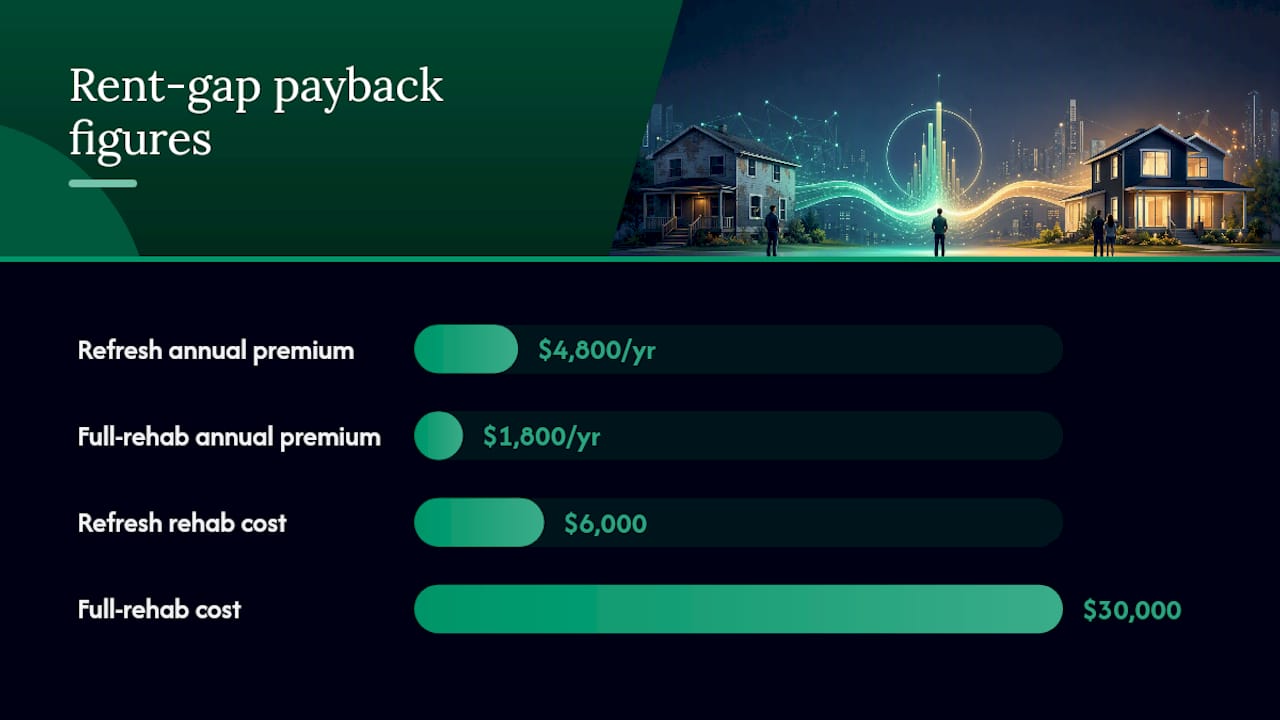
Say a rent-ready refresh costs $6,000 and closes a $400/month rent gap. That’s $4,800 a year in additional rent, a 1.25-year payback. Now say a full kitchen and bath gut costs $30,000 but only pushes rent up by $150/month, or $1,800 a year. That’s a 16.7-year payback, which makes no sense unless you’re also banking on a much higher ARV for a refinance or sale.
Below that threshold, you’re often better off doing the light version and banking the difference.
Remodeling industry data backs this up at resale too. A minor kitchen refresh returns roughly 85.7% of its cost, while a major upscale renovation returns closer to 58%. The pattern holds for rentals: smaller, targeted scope tends to pay back faster than a comprehensive overhaul.
If you’re planning to refinance under a BRRRR strategy, the calculus shifts again, because now ARV drives your cash-out amount, not just your rent roll. Run both scenarios, hold and rent-ready versus refinance and full rehab, through a BRRRR calculator before committing capital either direction.
Step-by-Step Checklists for Each Path
Bidding out a project without a prioritized checklist is how contractors pad scope and budgets balloon.
Rent-ready turnover, in priority order:
- Safety items first: smoke detectors, carbon monoxide detectors, working locks, GFCI outlets where required.
- Systems check: HVAC function test, water heater condition, plumbing leaks, electrical panel inspection.
- Cosmetic pass: paint, deep clean, carpet or flooring spot repairs.
- Curb appeal: landscaping cleanup, exterior touch-up paint, entry door hardware.
Full rehab, staged by phase:
- Inspection and scope: full property walkthrough with a licensed inspector, sewer scope if the home is older, written scope of work.
- Permits and structural: pull permits, address foundation or framing issues first.
- Systems: electrical, plumbing, HVAC, roofing, in that rough order since finishes depend on these passing inspection.
- Finishes: flooring, cabinets, countertops, paint, fixtures.
- Punch list and turnover: final walkthrough, photograph everything, prep marketing materials.
Pro Tip: Build a 15% to 25% contingency into every full rehab budget before you sign a contractor agreement. That range comes from underwriting practice around systems risk, since HVAC, electrical, plumbing, roofing, and foundation work routinely hide problems no inspection catches until walls are open.
Structure draws around completed phases, not calendar dates, and document every change order in writing. Scope creep on a full rehab is rarely one big mistake. It’s a dozen small unauthorized upgrades that add up to $8,000 you never budgeted.
Financing and Program Rules That Shape the Decision
Your financing source often decides which scope makes sense before you’ve even run the numbers.
Rent-ready work is usually cheap enough to fund out of pocket, through a HELOC, or with a short-term line of credit. Full rehabs typically require rehab-specific loans with staged draws, hard-money financing for a fix-and-flip timeline, or a 203(k)-style renovation loan if you’re financing the purchase and rehab together.
Municipal and state rehab programs add another layer worth checking before you assume you’re paying full freight. Some jurisdictions offer rehab assistance tied to conditions:
- Per-unit assistance caps that limit how much subsidized funding you can draw.
- Multi-year affordability periods, sometimes 10 years or longer, during which rent increases are restricted.
- Monitoring requirements that can outlast your planned hold period entirely.
Read the program covenant before you accept funds, not after. A 10-year affordability restriction can quietly kill your exit strategy if you planned to refinance and sell in year three. If you’re layering a rehab loan with a subsidy program, model both the restricted rent scenario and your original pro forma side by side using a rental cash flow calculator so you know exactly what you’re trading for the cheaper capital.
How Rehab Scope Moves Property Value
Value doesn’t move in a straight line with dollars spent. It moves with what buyers and appraisers in your specific submarket actually reward.
A rent-ready refresh rarely changes appraised value much beyond restoring the property to its baseline condition. It removes deferred maintenance from the picture, which protects value more than it creates new value. A full rehab, when scoped correctly, can push ARV meaningfully higher, especially if it brings a dated property up to the finish level of newer comps in the neighborhood.
The trap is over-improving for the block. A $150-per-square-foot kitchen gut in a neighborhood where comps top out at $180,000 doesn’t return dollar-for-dollar in appraised value, no matter how nice it looks. Appraisers anchor to comparable sales, not to your invoice total.
Marketability follows a similar logic but with a twist: rental marketability cares more about function than finish level. A unit with a dated but functional kitchen rents nearly as fast as one with quartz countertops, provided everything works and the unit is clean. Sale marketability, on the other hand, rewards visual upgrades more heavily because buyers emotionally react to kitchens and bathrooms in a way renters generally don’t.
That distinction should drive your scope decision as much as the rent-gap math does. If you’re holding and renting, spend where function lives. If you’re flipping or refinancing based on ARV, spend where appraisers and buyers actually look.
Where Each Approach Can Go Wrong
Both paths carry real risk, just different kinds.
Rent-ready risk is mostly about under-scoping. Skip a system inspection to save time, and you might rent a unit with an HVAC system that fails in month two, forcing an emergency repair and an unhappy tenant right after move-in. Rent-ready also has a ceiling: if the property genuinely needs structural or systems work, cosmetic fixes just delay the inevitable and can mask problems from a future buyer or appraiser, which creates disclosure risk.
Full rehab risk concentrates around three things: budget overruns, timeline slippage, and market timing. Contingency reserves get eaten fast when a contractor opens a wall and finds knob-and-tube wiring or termite damage nobody flagged during inspection. Permit delays in busy municipalities can add months, during which you’re carrying financing costs with zero rental income. And if market rents soften while your six-month rehab drags into month nine, the ARV assumptions that justified the whole project can quietly stop holding up.
There’s also a financing-specific risk worth naming: hard-money and rehab loans often carry higher interest rates and shorter terms than a standard mortgage. Every month the project runs long, that clock keeps costing you money regardless of construction progress. Before committing, stress-test your numbers against a slower timeline and a softer refinance appraisal, not just the best-case scenario your contractor quoted you.
Two Scenarios, Two Very Different Outcomes
A duplex purchased for $145,000 in a stable working-class neighborhood needed new paint, flooring in one unit, and a water heater replacement. Total rent-ready spend: $7,200. The rent gap between as-is and rent-ready condition was about $175 per unit per month, or $4,200 annually across both units. Payback landed under two years, and the investor held the property for cash flow with minimal risk exposure.
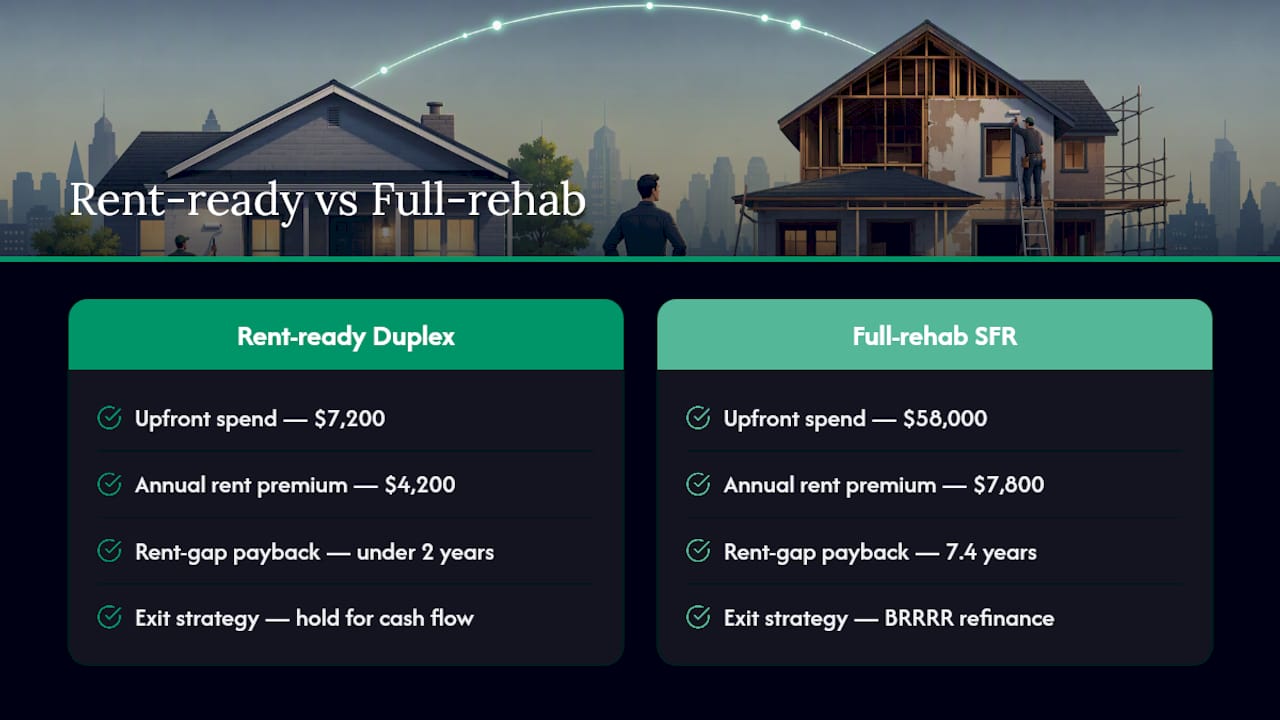
Compare that to a single-family purchase in a transitional neighborhood where the investor planned a full rehab: new kitchen, both bathrooms gutted, new HVAC, and a roof replacement, totaling $58,000. The rent premium after rehab was substantial, roughly $650 more per month than the as-is rent, or $7,800 annually. That’s a 7.4-year payback on rent alone, which only made sense because the investor’s exit was a BRRRR refinance, not a straight hold. The ARV jumped enough after rehab to pull most of the invested capital back out through refinancing, something a pure rent-gap calculation wouldn’t have captured on its own.
The lesson isn’t that one scope beats the other. It’s that the math only works when you match the scope to the actual exit strategy, not to what looks impressive in “before and after” photos.
What Happens to Maintenance After You’re Done
The renovation you choose doesn’t just affect turnover cost. It sets your maintenance baseline for years.
A rent-ready unit with older systems left untouched tends to generate more service calls: water heaters near end of life, HVAC units running on borrowed time, plumbing that’s patched rather than replaced. None of these are emergencies today, but they’re a slow drip of $200 to $800 repair calls that add up over a multi-year hold.
A full rehab that replaces major systems resets that clock. New HVAC, new plumbing, and new electrical typically mean five to ten years of lower maintenance frequency, which matters enormously if you’re planning to hold the property long-term rather than flip it. That reduced maintenance load is a real, if often overlooked, part of the ROI calculation, since it lowers your effective operating expenses even if it doesn’t show up in the rent roll.
The trade-off: full rehabs sometimes introduce new maintenance items too, especially if lower-cost materials get value-engineered into the finish package under budget pressure. Vinyl flooring installed without proper subfloor prep, or a cheap water heater swapped in to hit a number, can create issues within a year or two that a slightly higher-quality choice would have avoided.
What Tenants Actually Expect From Each Condition
Tenant satisfaction tracks closely with expectations set at the showing, not with some abstract quality bar.
A rent-ready property, priced and marketed accurately, generally satisfies tenants who understand they’re getting a clean, functional, safe home without luxury finishes. Problems arise when a rent-ready unit is marketed with photos or language that oversells its condition, setting expectations the unit can’t meet on move-in day.
Rent-ready standards sit above legal habitability but below move-in-ready, and in competitive rental submarkets, that gap is shrinking. Tenants comparing three or four listings increasingly expect updated finishes as table stakes, which is pushing some investors toward a slightly heavier scope than they’d have chosen five years ago just to stay competitive on days-on-market.
Full rehab properties tend to attract tenants with higher expectations across the board, not just for finishes but for responsiveness on maintenance requests. A tenant paying a premium for a renovated unit expects that premium to include reliability. That’s usually not a problem since new systems break down less often, but it does mean any hiccup gets reported and expected to be resolved faster than it would be in a lower-rent, rent-ready unit. Property condition directly shapes what rent a landlord can realistically command, and it shapes tenant behavior after move-in just as much.
Three Things Experienced Investors Watch For
The mistakes that show up over and over: over-improving for the submarket, under-budgeting contingency on a full rehab, and ignoring who actually rents in that neighborhood before choosing finishes. A workable rule of thumb: if the rent-gap payback exceeds five years and you’re not refinancing, scale the scope back. Run your own numbers before assuming either path is the safer bet.
— Michael
Try the Calculators Before You Commit to a Scope
You don’t have to guess at any of the numbers in this article. Run your own deal through Real Estate Investor Toolkit’s free calculators before you sign a contractor agreement or make an offer, and you’ll know within minutes whether rent-ready or full rehab actually wins on your specific property.
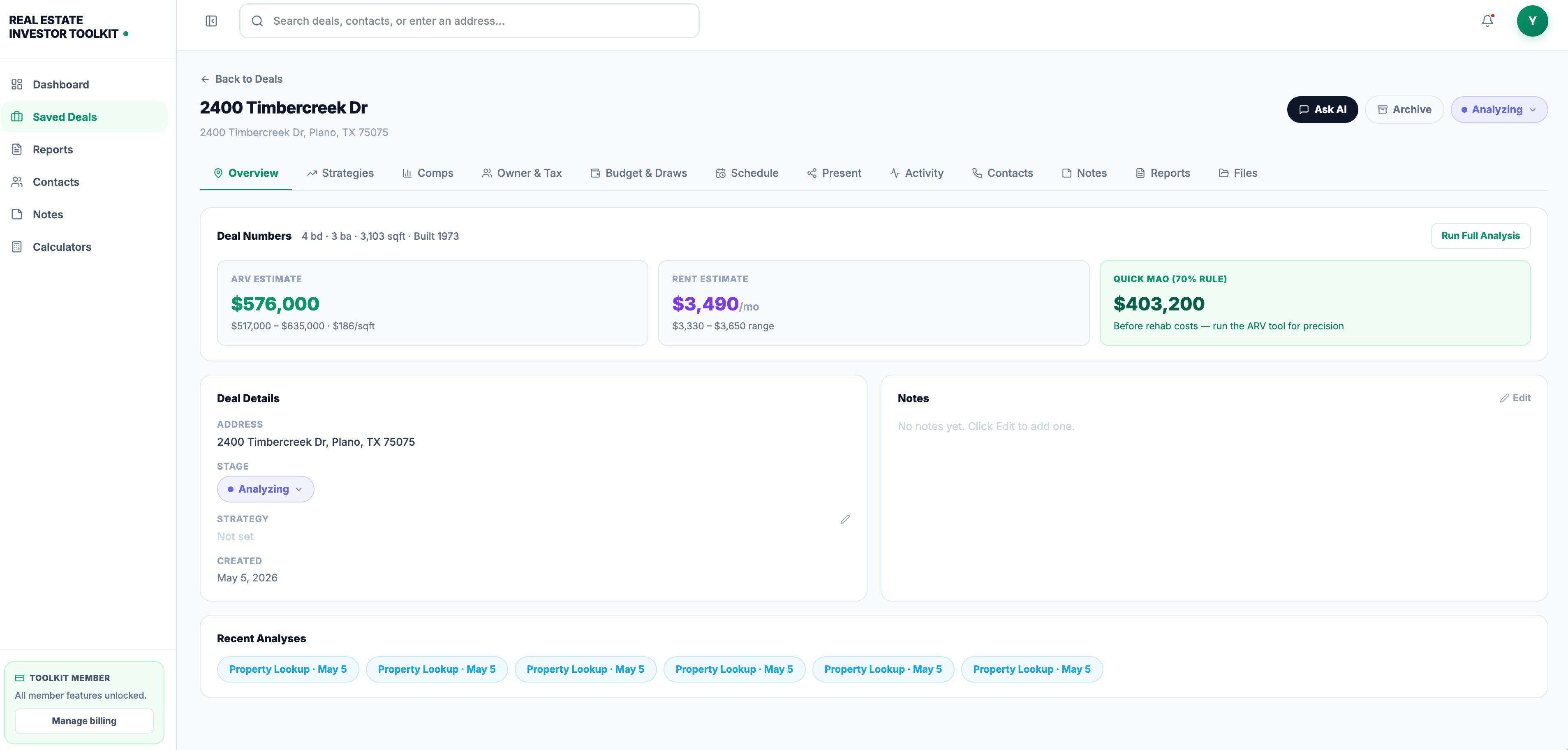
Start with the Rehab Cost Calculator to build a realistic budget for either scope, including a proper contingency line. Then plug your projected rents into the Rental Property Calculator to run the rent-gap payback math from this article against your actual comps. If you’re weighing a refinance exit, the BRRRR Calculator will show you what ARV needs to hit for the numbers to work. All three are free to use with no sign-up required. When you’re ready to save deals, track a pipeline, or pull deeper property reports, the full guide library walks you through upgrading to a saved account.
Sources
- Rent-Ready Checklist: What to Fix Before Renting
- How Much Does It Cost to Remodel a House? (2026)
- Make-Ready vs. Rent-Ready: Renovation ROI Guide
- Rental housing rehabilitation guide (DEED MN)
Recommended
- Investors: Underwriting Checklist to Prevent 20 to 40% Rehab Overruns
- How to Estimate Rehab Costs on Investment Properties — Real Estate Investing Guide
- Rehab Cost Calculator — Fix & Flip Deal Analyzer
- How to Analyze a Rental Property: Cash Flow, Cap Rate, and the 1% Rule — Real Estate Investing Guide