Proof of Funds: Wholesalers Can Request a Letter Today

A proof of funds (POF) is a document showing a seller that your money is real and ready to close, and for a wholesaler the fastest accepted versions are a recent bank statement, a bank-issued POF letter, or a hard-money or transactional funding commitment letter. If you need one today, call your bank or lender and ask for a dated letter stating the available amount.
TL;DR:
- A bank letter carries more weight when it names the account holder and available amount, uses current letterhead, and includes a signature and verification contact.
- If you lack cash reserves, a hard money or transactional lender can issue a commitment stating the amount and terms for a specific property.
- When assigning a contract, use the end buyer’s proof only with written permission, and ensure the document names that buyer rather than a generic entity.
- Before sharing statements, redact account, routing, and Social Security numbers, but leave your name, bank, date, and available balance visible for verification.
- Sellers usually expect documents dated within 30 to 90 days, and a deposit remains separate because proof of funds shows capacity, not commitment.
Table of Contents
- What proof of funds means and why sellers ask for it
- Which documents count as acceptable proof of funds
- How beginners can get proof of funds fast
- How to share proof of funds safely with sellers and agents
- How recent your proof of funds needs to be
- Checklist and sample wording for requesting a POF letter
- What experience teaches about proof of funds in practice
- How the Real Estate Investor Toolkit helps size your offer
- FAQ
- Sources
What proof of funds means and why sellers ask for it
Proof of funds is documentation that verifies you have liquid money available to complete a purchase, most often a bank statement or a bank-issued letter confirming an available balance. Sellers and listing agents ask for it before they take an offer seriously, especially from a wholesaler making a cash offer with no mortgage contingency, because it verifies a buyer has sufficient and accessible liquid resources for the deal.
POF is not the same as a mortgage preapproval or prequalification letter. A preapproval shows a lender is willing to loan you money based on your credit and income, while POF shows cash availability right now, with no financing contingency attached. For a wholesaler assigning a contract, that distinction matters because sellers want certainty that the deal will close on schedule.
Sellers and their agents request POF to cut closing risk. A signed purchase agreement means little if the buyer cannot actually pay, so agents treat POF as a screening step that separates serious cash buyers from offers that will fall apart during escrow. It also speeds up negotiations, since a seller comparing multiple offers will usually favor the one backed by verified funds over one that just promises to “figure out financing.”

Which documents count as acceptable proof of funds
Sellers generally accept a handful of document types, and each one needs specific details to be considered credible rather than something you typed up yourself.
A bank statement is the simplest option. It should show your full name as account holder, the bank’s name, a statement date, and an available balance that covers the offer. Partial or incomplete statements raise red flags, so most sellers want the full page showing the bank’s header and account summary.
A bank-issued POF letter carries more weight because a bank employee is vouching for the balance. Fields that make it credible:
- Bank letterhead with the institution’s name and address
- The account holder’s exact name matching the offer
- A specific dollar amount available, not a vague “sufficient funds” statement
- A recent date and a signature from a bank representative with contact information
Hard-money lender commitment letters and transactional funding letters work the same way for wholesalers using leveraged capital. These should state the loan amount, terms, and an escrow or closing statement showing the funds are earmarked for the specific property. A bank-issued POF letter can usually be requested in a few days, which is fast enough for most wholesale timelines.
Pro Tip: Ask your bank for the letter on their letterhead with a direct phone line listed, since that single detail speeds up verification more than anything else on the page.
How beginners can get proof of funds fast
New wholesalers often assume POF requires a large cash reserve sitting idle, but there are several realistic paths that do not require that.
- Use your own bank statement. Download the most recent one from your online banking portal, then black out the account number before sending it anywhere, keeping the name, balance, and date visible.
- Request a bank-issued POF letter. Call or visit a branch and ask for a letter confirming available funds for real estate purchase purposes. Most banks issue these within a day or two for existing customers.
- Get a commitment letter from a hard-money lender or private investor. Tell the lender you need a POF letter for an offer and ask them to state the approved amount and property type in writing.
- Use transactional or bridge funding providers. These short-term lenders issue POF letters specifically for wholesalers who plan to double-close, though agents may call to verify the letter is tied to a real funding source before accepting it.
- Use a buyer’s POF when assigning a contract. If you are wholesaling to an end buyer, get written permission to present their POF alongside your assignment contract, and confirm the buyer’s letter names them specifically rather than a generic entity.
Pro Tip: When calling a hard-money lender, a simple request like “Can you send a signed commitment letter showing approved funds for this property address?” usually gets a same-day response.
If you are working with a hard-money lender for the first time, ask upfront how long their letter-issuing process takes so you are not caught waiting once you have a contract to submit.
How to share proof of funds safely with sellers and agents
Sharing POF securely protects your personal information while still giving the seller what they need to trust your offer.
- Redact account numbers, routing numbers, and Social Security numbers, but leave your name, the bank name, the date, and the available balance visible.
- Include a verification contact, such as the bank representative’s phone number or the lender’s escrow officer, so the agent can confirm the letter quickly.
- Share through the channel the agent prefers, whether that is an offer portal, an encrypted PDF link, or handing over a printed copy in person.
- Expect the agent to call the issuing bank or lender directly, or check escrow instructions, so make sure the contact information on your letter is current before you send it.
Platforms built for offer submission, like SendMLS, let you attach POF documents directly to state-approved contracts when you are sending offers on MLS listings, which keeps everything in one verifiable package for the agent.
How recent your proof of funds needs to be
Most sellers expect proof of funds to reflect your current balance, not a snapshot from months ago. Documents are typically expected within 30 to 90 days of the offer date, and competitive markets or institutional sellers sometimes ask for something closer to the 30-day end of that range.

If your funds are spread across multiple accounts, consolidate the proof into one letter when possible, or submit statements from each account with a short cover note explaining the combined total. Earnest money is a separate requirement from POF: a seller may still want a deposit submitted with the offer even after you have shown proof of funds, since the deposit demonstrates commitment while POF demonstrates capacity.
Checklist and sample wording for requesting a POF letter
Before you call your bank or lender, have this list ready so you get a usable letter on the first try:
- Bank or lender name and official letterhead
- Current date
- Exact account holder name matching your offer paperwork
- Specific available dollar amount
- Authorized signature from a bank or lender representative
- Direct contact phone number or email for verification
Two sample lines you can use when requesting one: “Could you issue a proof of funds letter on bank letterhead showing my available balance as of today’s date?” and “I need a signed commitment letter confirming approved funds for a property purchase, with your direct line included for verification.”
A proof of funds letter older than 90 days is commonly treated as stale, since banks and sellers both expect documentation that reflects a current balance rather than one from an earlier point in the year.
What experience teaches about proof of funds in practice
Working deals over time teaches a few habits worth adopting early. First, speed matters more than polish: a plain bank letter requested the same day you sign a contract beats a perfectly formatted one that arrives a week late. Second, honesty about your funding source builds trust faster than vague language, since agents who sense evasion start making phone calls that slow everything down. Third, verification etiquette counts: give agents a contact who will actually answer, and tell your lender ahead of time that a call might come in.
— Michael
How the Real Estate Investor Toolkit helps size your offer
Knowing you can get a POF letter is only half the job. You also need to know the right number to put on it, and that is where our calculators come in. Before you request a letter, run the numbers so the amount you ask for actually matches a deal worth pursuing.
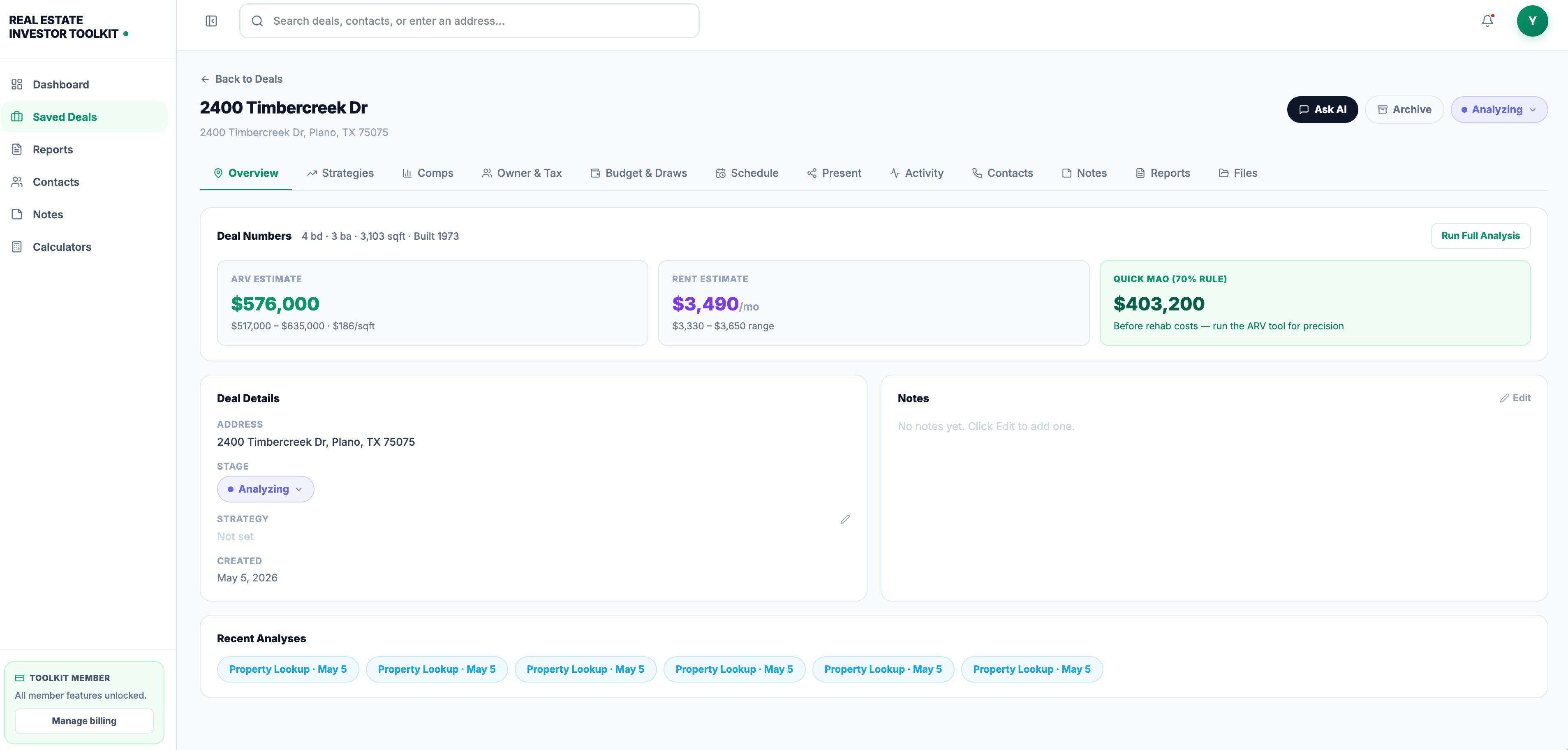
- Our ARV Calculator estimates after repair value using market comps, which helps you set a ceiling before you request funds.
- Our rehab estimator gives a realistic repair budget so your POF amount covers the full project, not just the purchase price.
- Our financing calculator models different funding scenarios so you can match the loan or cash amount to what a lender is actually willing to commit in writing.
- Our wholesale offer formula guide walks through calculating your maximum allowable offer before you ever pick up the phone to request a letter.
Our free calculators require no sign-up, so you can size a deal in minutes and request a POF letter for the right amount the same day. When you are ready for saved reports and advanced property data across multiple deals, our Real Estate Investor Toolkit plan is $39.99 per month.
FAQ
How do you get proof of funds for wholesaling?
Request a bank statement or bank-issued letter from your own account, or ask a hard-money lender or private investor for a signed commitment letter showing the approved amount. Most banks issue a letter within a day or two, and lenders often respond the same day when you give them the property address and amount needed.
What is the 70% rule in wholesaling?
The 70% rule is a formula investors use to estimate a maximum offer: 70% of the after repair value minus estimated repair costs. It helps set the ceiling for what to offer a seller, which in turn tells you what amount to show on a proof of funds letter.
What is acceptable for proof of funds?
Acceptable proof of funds generally includes a recent bank statement, a bank-issued letter on letterhead, or a lender’s commitment letter, each showing the account holder’s name, an available balance, and a date. These documents are typically expected to be no older than 30 to 90 days so sellers know the figures still reflect your current position.
What documents can be used as proof of funds?
Common documents include personal bank statements, bank-issued POF letters, hard-money or private lender commitment letters, and escrow or closing instructions showing funds reserved for a specific property. A HELOC statement showing available credit can also work when it clearly states the usable balance.
Sources
- Proof of Funds (POF): What It Is, Qualifying Documents, and How to Obtain — Investopedia
- What Is Proof of Funds? — The Balance
- Proof of Funds Letter: What It Is and How to Get One — CNBC