DSCR Calculation: Formula, Examples, and Lender Thresholds

The DSCR formula is Net Operating Income ÷ Total Debt Service. A ratio of 1.00 means the property breaks even on its debt payments. Most lenders want to see 1.20 to 1.25 as a minimum, and anything above 1.50 is considered strong. Higher is always better, and anything under 1.0 means the income doesn’t cover the debt.
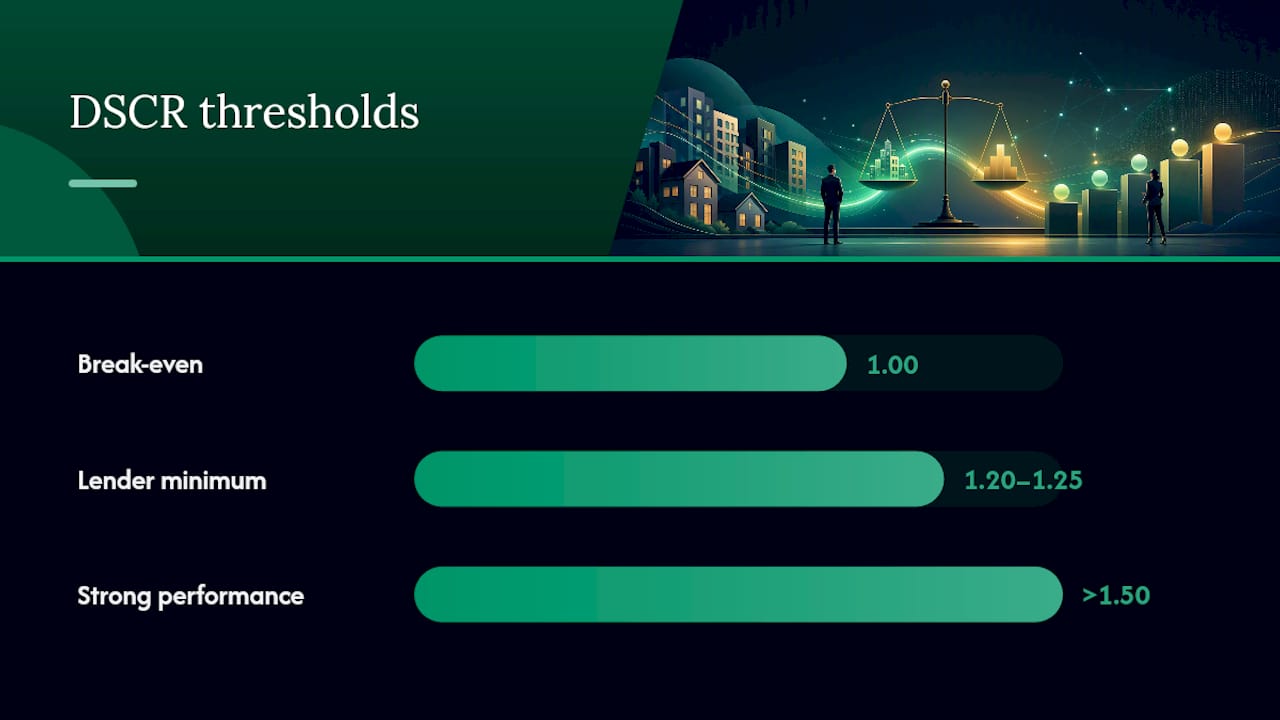
Quick read: if your DSCR lands below break-even, the property’s income shortfall could sink your loan application before it starts. If it’s above 1.25, you’re in solid territory for most conventional lenders.
Key Takeaways
DSCR equals net operating income divided by total debt service, and lenders typically require a minimum between 1.20 and 1.25 for approval.
| Point | Details |
|---|---|
| Formula basics | DSCR = NOI ÷ Total Debt Service; keep both figures on the same annual or monthly basis. |
| Lender thresholds | 1.00 is break-even, 1.20 to 1.25 is a common minimum, and above 1.50 is considered strong. |
| Watch your denominator | Use PITIA for residential DSCR loans and annual debt service for commercial loans, matching the lender’s method. |
| Avoid inflated numbers | Skipping taxes, insurance, or HOA dues can inflate DSCR by 20% to 40% versus real underwriting figures. |
| Test scenarios first | Real Estate Investor Toolkit’s rental and financing calculators let you model NOI and PITIA scenarios with no signup required. |
Table of Contents
- What the DSCR Formula Actually Measures
- How to Calculate DSCR Step by Step
- How Lenders Interpret DSCR and Set Minimums
- DSCR Formula Variations You Need to Know
- What to Prepare Before You Run a DSCR Calculator
- Common DSCR Calculation Mistakes to Avoid
- Run Your Own DSCR Scenarios Before You Commit
- Sources
What the DSCR Formula Actually Measures
Net Operating Income is your revenue minus cash operating expenses. It’s what’s left after rent (or business revenue) covers property management, maintenance, insurance, and property taxes. What it doesn’t include: interest, income taxes, and depreciation. That last part trips people up constantly. NOI is not the same as taxable net income, and it’s not EBITDA, either. It’s a cleaner number designed to answer one question: does this property generate enough cash to service its debt?
Total Debt Service is the required principal plus interest for the period you’re measuring, almost always annualized. If your mortgage payment is monthly, multiply it by 12 before you divide. Skipping this step is one of the fastest ways to get a wrong answer.
Here’s how to sort your line items:
- Count toward NOI: gross rental income, laundry or parking fees, minus vacancy reserve, property management fees, repairs and maintenance, insurance, property taxes.
- Exclude from NOI: mortgage interest, income taxes, depreciation, capital improvements, owner draws.
- Count in debt service: scheduled principal and interest payments, annualized; sinking fund contributions if the loan requires them.
- Exclude from debt service: one-time refinance costs, unrelated business debt not secured by the property.
How to Calculate DSCR Step by Step
Once you know what goes where, the math itself is simple. Follow this sequence every time:
- Collect gross revenue. For a rental, this is annual rent collected (or projected). For a small business, it’s total annual revenue.
- Subtract operating expenses. This gives you NOI. Leave out interest, taxes on income, and depreciation.
- Calculate annual debt service. Take the monthly principal and interest payment and multiply by 12. Add any other required annual debt payments tied to the property.
- Divide NOI by total debt service. That result is your DSCR.
Here’s a worked example. A four-unit rental property brings in $54,000 a year in gross rent. Operating expenses, including management, maintenance, insurance, and property taxes, run $18,000. That leaves NOI of $36,000. The mortgage payment is $2,200 a month in principal and interest, or $26,400 annualized.
$36,000 ÷ $26,400 = 1.36 DSCR.
That property clears most lenders’ minimums with room to spare. The one habit that prevents most errors: keep every number on the same time basis. If your expenses are annual, your debt service needs to be annual too, not a monthly figure sitting next to a yearly one.

How Lenders Interpret DSCR and Set Minimums
Lenders read DSCR as a direct measure of repayment risk, and the number drives more than a simple pass or fail.
- 1.00 means break-even. Most lenders won’t approve a loan here because there’s no cushion for a vacancy or a repair bill.
- 1.15 to 1.25 is the common minimum range for conventional and small-business lending, with SBA 7(a) loans sometimes accepting figures closer to 1.15.
- 1.50 or higher signals a strong deal, and lenders may respond with better pricing, higher loan-to-value allowances, or fewer reserve requirements.
A DSCR below the lender’s floor doesn’t always kill the deal outright. It can shift you toward a higher down payment, a smaller loan amount, or a no-ratio program that skips DSCR entirely but usually charges a rate premium in exchange. Commercial loans, SBA programs, and conventional mortgages each apply their own overlays on top of the base minimum, so the number that clears one lender might not clear another.
DSCR Formula Variations You Need to Know
Not every lender calculates DSCR the same way, and using the wrong version will give you a number that doesn’t match what underwriting actually sees.
- Residential DSCR loans typically use gross monthly rent divided by monthly PITIA: principal, interest, taxes, insurance, and association dues, all rolled into one denominator.
- Commercial loans typically use annual NOI divided by annual total debt service, following the standard formula.
- Interest-only periods lower the denominator temporarily, which inflates DSCR during that window. Model the fully amortizing payment too, since that’s what happens once the interest-only period ends.
- HOA dues get added into PITIA for residential DSCR loans but are treated as a normal operating expense in the commercial NOI calculation.
Pro Tip: Ask your lender which method they use before you run any numbers. A residential DSCR calculation and a commercial one can produce meaningfully different results from the same property.
What to Prepare Before You Run a DSCR Calculator
A calculator is only as good as what you feed it. Have these ready before you start:
- Qualifying rent, based on the lower of a signed lease or the appraiser’s Form 1007 market rent estimate, not your own rent projection.
- Confirmed tax and insurance figures, ideally from the assessor’s office and an actual insurance quote, rather than the seller’s current bill, which may reflect an outdated assessment.
- HOA or association dues, if applicable.
- Proposed loan rate and term, so the calculator can generate an accurate monthly payment.
Keep every input on the same time basis, whether that’s monthly or annual, and run more than one scenario. Try a higher insurance premium or a shorter loan term to see how much cushion you actually have. The rental property calculator and financing calculator at Real Estate Investor Toolkit are built to handle exactly this kind of scenario testing without requiring a signup.
Common DSCR Calculation Mistakes to Avoid
Most bad DSCR numbers come from the same handful of errors, and they’re easy to catch once you know what to look for.
- Using P&I only. Leaving out taxes, insurance, and HOA dues can inflate your DSCR by 20% to 40% compared to what underwriting actually calculates.
- Using the seller’s tax bill. Property taxes often reassess after a sale, so your real number could be higher.
- Using post-rehab rent for a purchase loan. Underwriters want current, verifiable rent, not what you expect after renovations.
- Counting depreciation or owner draws in NOI. Neither reflects real cash flow available to service debt.
Before you trust a result, run three quick checks: confirm NOI is positive, confirm your denominator is annualized consistently, and compare your number against the lender’s stated minimum. Then flex the three levers that move DSCR the most, down payment, rent, and loan rate or term, to see how much room you actually have before you submit an application.
A practical investor’s take
Getting the tax and insurance numbers right matters more than getting the rent number right; sellers routinely underquote both. Confirm your qualifying rent hierarchy early, model at least two loan terms, and treat a no-ratio program as a fallback, not a first choice, unless your capital structure genuinely can’t hit the DSCR floor another way.
Run Your Own DSCR Scenarios Before You Commit
Once you understand the formula, the real work is testing it against your actual numbers, not a rough estimate. Real Estate Investor Toolkit’s calculators are built to mirror what lenders actually check: PITIA, qualifying rent based on lease or appraiser data, confirmed tax and insurance figures, and proposed loan terms, all in one pass, with no account required.
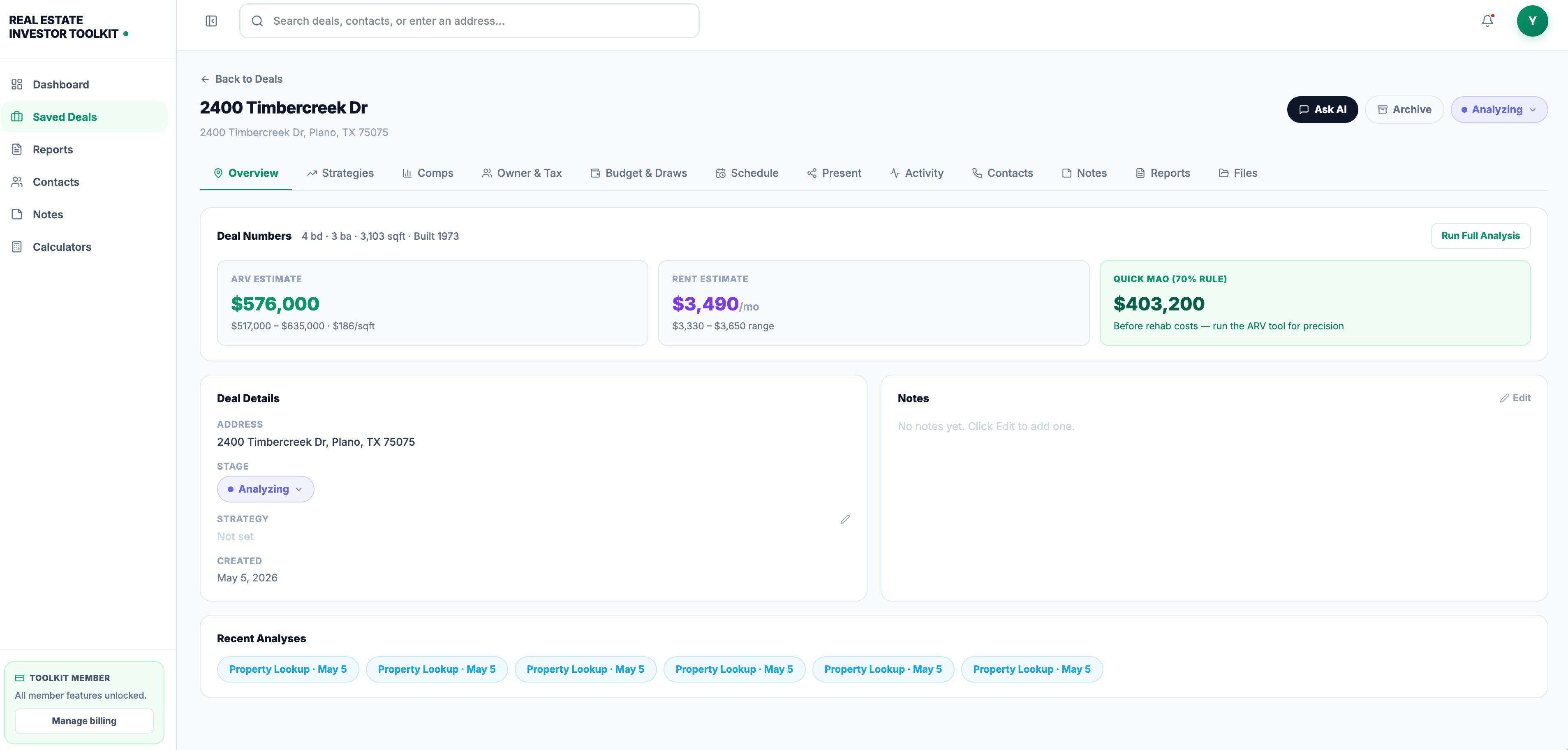
Run your property through the rental property calculator to build an accurate NOI, then move to the investment property financing calculator to test how different rates and terms shift your DSCR. Compare a few scenarios side by side before you lock in a loan term, and check the learning hub for deeper frameworks on underwriting and deal analysis. Start with a property you’re evaluating right now and see where your number lands.
Sources
- How to Calculate Debt-Service Coverage Ratio | Chase for Business
- Debt-Service Coverage Ratio (DSCR) — re-leased
- DSCR Loans: The Complete Investor Guide (2026) — Mbanc
This article is general information, not a substitute for advice from a qualified financial advisor. Consult a qualified financial professional about your own circumstances before acting on anything here.