When an Appraisal Is Low: CMA Actions for U.S. Buyers & Sellers

A CMA is an agent’s pricing estimate; an appraisal is a licensed appraiser’s formal opinion used by lenders. A seller’s agent typically builds a CMA before listing a home, while a lender orders an appraisal after a buyer signs a contract. One guides pricing and offer strategy, the other decides whether a mortgage gets approved at the agreed price.
TL;DR:
- A CMA should compare similar homes sold within the past three to six months, alongside pending and active listings, and present a reasoned price range.
- FHA appraisals require a physical inspection and documented comparable adjustments; low risk files with strong data may qualify for a lender waiver.
- Appraisal fees, usually paid by the buyer, commonly run several hundred dollars depending on location and property; agents typically provide CMAs free.
- For a low appraisal, send factual corrections and comparable sales to the lender for reconsideration, then renegotiate or cover the gap if your contract permits.
Table of Contents
- What a Comparative Market Analysis (CMA) is and what it includes
- What a home appraisal is and how licensed appraisers reach value
- Key differences at a glance
- When each matters: practical use cases for sellers, buyers, and lenders
- What to do if an appraisal comes in low
- How buyers and sellers should use CMAs and appraisals together
- A practical view from pricing to underwriting
- How our calculators and comps analyzer support your pricing decisions
- FAQ
- Sources
What a Comparative Market Analysis (CMA) is and what it includes
A Comparative Market Analysis is a report a real estate agent prepares to help a seller set a list price or help a buyer decide what to offer. Agents build it from Multiple Listing Service data: recently sold homes, pending sales, and active listings in the same area. According to Rocket Mortgage’s explanation of CMAs, the report typically uses these three categories of listings to estimate what a property is worth right now, not what it was worth months ago.

The agent selects properties similar in size, age, condition, and location, then adjusts for differences such as an extra bedroom or a finished basement. The result is usually a price range rather than a single number, because a CMA reflects market judgment, not a certified calculation.
A CMA typically includes:
- Recently sold comparable properties, usually within the past three to six months
- Active and pending listings to show current competition and buyer demand
- A suggested price range with the agent’s reasoning for where the subject property fits
- Notes on local market conditions, seasonality, and marketing strategy
A CMA answers the question “what should this home list or sell for in today’s market.” It does not answer the question a lender asks before approving a mortgage, which is why sellers who want to stress-test their pricing often pull their own comps for investment properties before trusting a single agent’s range.
What a home appraisal is and how licensed appraisers reach value
An appraisal is a formal opinion of value prepared by a state-licensed or state-certified appraiser, and it carries legal weight that a CMA does not. For transactions involving federally related lending, appraisers must follow the Uniform Standards of Professional Appraisal Practice, known as USPAP, which The Appraisal Foundation maintains as the ethical and performance framework for the profession.
Appraisers reach value through one or more recognized approaches:
- Sales-comparison approach: the primary method for most homes, comparing the subject property to recent closed sales
- Cost approach: estimates what it would cost to rebuild the property, often used for new construction or unique properties
- Income approach: applied mainly to rental or investment properties based on income potential
The HUD valuation handbook describes how FHA-related appraisals require a physical inspection, documented adjustments between the subject property and each comparable, and a final reconciliation where the appraiser weighs the approaches to arrive at one supported value.
One standard, not one price: USPAP governs how a licensed appraiser must document and support a value opinion for a federally related transaction, which is why two appraisers working the same file tend to land in a tight range rather than wildly apart.
Some transactions skip a full appraisal through appraisal waivers or desktop and hybrid appraisals, which rely on data history and lower complexity to speed up underwriting. Appraisal fees are commonly paid by the buyer and often run several hundred dollars depending on the property and location.
Key differences at a glance
The two reports diverge on almost every meaningful axis, from who prepares them to what they are legally allowed to do.
- Purpose: a CMA informs pricing and offer strategy; an appraisal determines collateral value for a loan
- Who prepares it: a real estate agent prepares a CMA; a licensed or certified appraiser prepares an appraisal, independent of the sales transaction
- Legal standing: appraisals for federally related transactions must follow USPAP; CMAs follow no formal regulatory standard
- Methodology: CMAs rely mainly on comparable listings with informal adjustments; appraisals document adjustments, inspections, and a formal reconciliation
- Cost: agents typically provide CMAs free as part of their service; appraisals carry a fee usually paid by the buyer
- Use: a CMA shapes a listing price or an offer; an appraisal controls whether a lender will fund the loan at that price
A CMA does not substitute for an appraisal in most federally related mortgage transactions. Lenders rely on the appraisal, or an approved alternative like a waiver, to protect the loan against the property’s actual market value.
When each matters: practical use cases for sellers, buyers, and lenders
Matching the right report to the right moment keeps a transaction moving and avoids surprises at closing.
- Sellers use a CMA before listing to set a realistic price, decide on staging investment, and plan the timing of any price reduction if the home sits on market.
- Buyers use a CMA to shape an offer and judge how much negotiating room exists, especially in a market with multiple comparable sales nearby.
- Lenders order an appraisal after contract to confirm the loan amount is supported by collateral value, and may approve an appraisal waiver or accept an automated valuation model in eligible cases, per FHFA guidance on AVM quality control.
- Low-risk refinances or purchases with strong data history and low complexity are the typical candidates for a waiver, which signals the lender sees less valuation risk in that specific file.
Buyers relying on financing should treat the appraisal as the real test of their offer price, while sellers should treat the CMA as a starting point that the market, and later the appraiser, will confirm or challenge.
What to do if an appraisal comes in low
A low appraisal does not end a deal, but it does require fast, documented action.
- Review the appraisal report for factual errors: wrong square footage, missed renovations, or an incorrect bedroom count.
- Gather comparable sales evidence, including closed transactions with similar financing and condition that the appraiser may have missed; a repair-adjusted comps workflow can help organize this evidence clearly.
- Request a reconsideration of value through the lender, since the CFPB’s guidance on challenging appraisals explains that the lender, not the borrower, submits the reconsideration to the appraiser.
- Decide on next steps: renegotiate the price, cover the appraisal gap in cash, increase the down payment, or walk away if the contract allows it.
Pro Tip: Submit corrected facts and comparable sales, never a target price. Lenders and appraisers will consider documented errors but will not adjust a value to match what a buyer or seller wants.
How buyers and sellers should use CMAs and appraisals together
The two reports work best as a sequence, not a substitute for one another.
- Before listing: pull a CMA and cross-check it against your own pulled comps, especially in a market with limited MLS access, using a comps-without-MLS workflow if needed.
- Before making an offer: combine the CMA with lender pre-approval guidance to understand how the financing limits your negotiating room, since how lenders evaluate your mortgage affects what price a loan will actually support.
- After going under contract: prepare documentation on recent upgrades, permits, and condition details the appraiser will need during inspection.
- If values diverge: have a financial plan ready, whether that means bridging a gap in cash or renegotiating terms before the financing contingency expires.
Keeping a simple printable checklist of comps, upgrades, and permit records on hand saves time if a reconsideration becomes necessary later.
A practical view from pricing to underwriting
A CMA earns its keep when you’re setting a price or deciding what to offer, with tools that let you receive and compare multiple cash offers, as explained in detail by the real role of comparative market analysis, while an appraisal earns its keep when a lender needs to confirm that price holds up against real market data. I have seen deals stall simply because a seller trusted a CMA alone and skipped building a documented comps file, something that becomes critical the moment an appraisal comes in low. When the stakes are high, pair a licensed professional’s judgment with your own documented evidence rather than relying on either report in isolation.
— Michael
How our calculators and comps analyzer support your pricing decisions
We built the Real Estate Comps Analyzer and a set of free calculators to help you assemble the kind of documented, defensible comps that strengthen a CMA or support a reconsideration of value request. These tools do not replace a licensed appraisal, but they give you a faster, data-backed starting point.
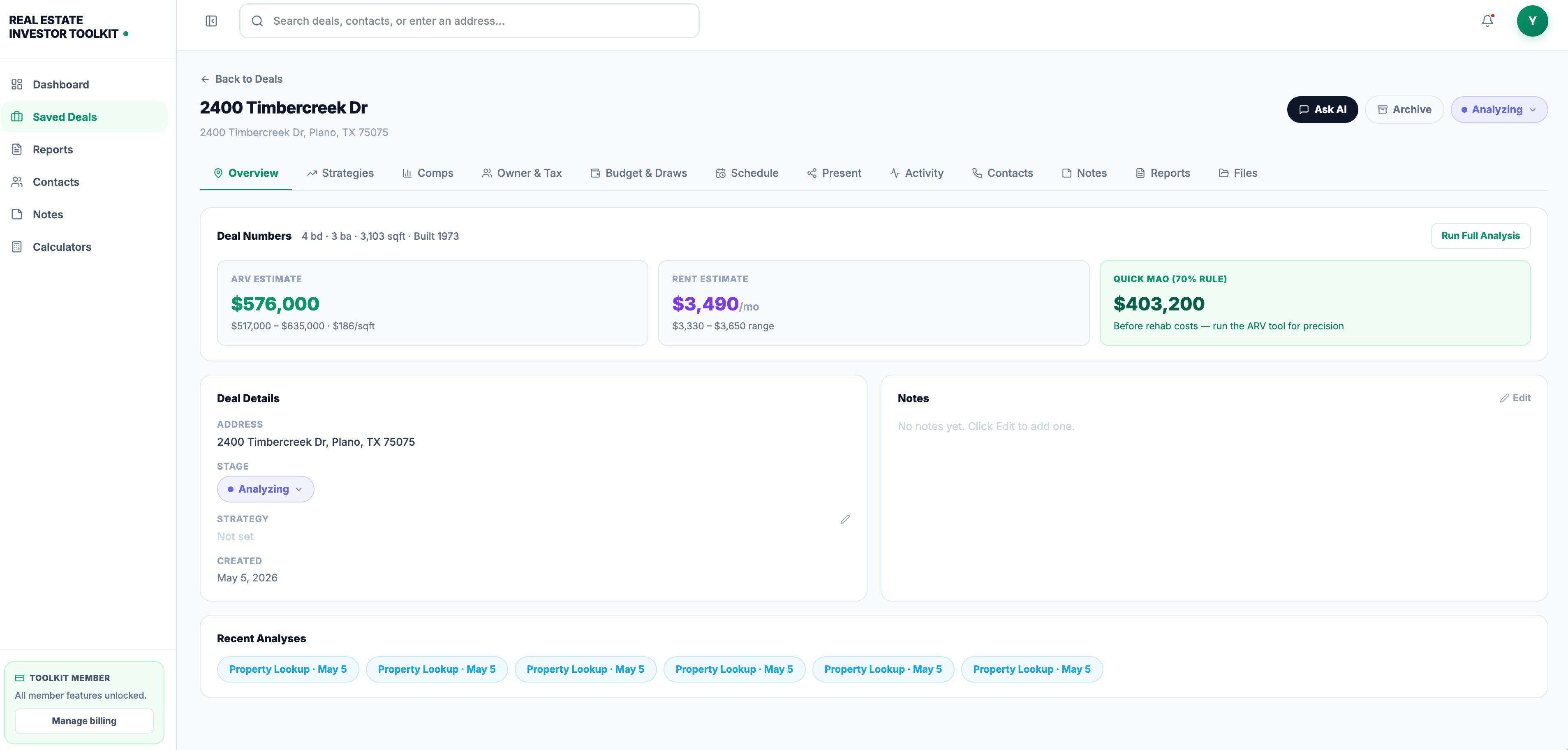
- Comps Analyzer: build and adjust comparable sales with verified market data
- ARV and MAO calculators: model after repair value and maximum offer scenarios before you bid
- Rehab and mortgage calculators: test financing scenarios and appraisal gap outcomes before you commit
| Tool | What it helps you do |
|---|---|
| Comps Analyzer | Assemble documented comparable sales |
| ARV Calculator | Estimate after repair value for pricing decisions |
| Mortgage Calculator | Model financing scenarios against appraisal outcomes |
Pro Tip: Run your numbers before you negotiate a low appraisal, not after; having a documented comps file ready speeds up any reconsideration request.
Our free calculators require no sign-up, and unlimited reports, saved pipelines, and AI deal insights are available on the Real Estate Investor Toolkit plan for $39.99 per month.
FAQ
Are CMA and appraisal the same thing?
No, a CMA is an agent’s pricing estimate based on comparable listings, while an appraisal is a licensed appraiser’s formal, regulated opinion of value used by lenders. They serve different purposes and carry different legal weight in a transaction.
What is found in appraisal but not CMA?
An appraisal includes a physical inspection, documented adjustments between comparables, and a formal reconciliation following USPAP and, for FHA loans, HUD’s valuation requirements. A CMA skips the formal inspection and regulatory framework entirely.
How much does a CMA cost from a realtor?
Agents typically provide a CMA free as part of their listing or buyer representation services. For comparison, appraisals often carry a fee, commonly several hundred dollars depending on the property and location.
Is fair market value higher than appraised value?
Not necessarily, since both aim to reflect what a property is actually worth, but they can diverge because a CMA reflects current competitive listings while an appraisal applies formal adjustments and reconciliation. When the two disagree significantly, the appraisal controls loan approval because lenders rely on it as the collateral value.
Sources
- What is a CMA in real estate? | Rocket Mortgage
- USPAP® – The Appraisal Foundation
- HUD Valuation Handbook (selected excerpts)