Investors Build a HUD Ready Capital Expenditure Plan in 15–30 Minutes

Capital expenditure planning means building a property-level schedule that lists every major system, estimates when it will need replacement, and prices out the cost so you can budget and finance it before it becomes an emergency. The fastest way to start is to record every major component, assign an estimated useful life to each one, estimate its replacement cost, and run those numbers through a calculator to get a reserve schedule and rehab budget you can act on today.
TL;DR:
- Accurate component-level inspections and documented remaining useful life estimates are essential for building a reliable capital expenditure schedule.
- Reserve sizing based on actual component conditions and proper funding methods reduces the risk of cash flow problems during property upgrades or refinancing.
- Using specialized calculators and templates streamlines transforming inspection data into actionable rehab budgets, reserve plans, and financing scenarios.
- Conservative assumptions about remaining useful life prevent underfunding issues that can delay refinancing or cause project stalls.
- Regular updates and clear documentation of assumptions ensure your capex plan remains relevant and credible during property financing or valuation processes.
Table of Contents
- Why capital expenditure planning changes your investment outcomes
- How to build a component-level capex schedule from an inspection
- Estimating costs and building a rehab budget that survives contact with reality
- Timing and funding: matching your reserve to when the bills actually arrive
- Using calculators and templates to turn your schedule into numbers
- Quick checklist and template fields for your first capex plan
- What I’ve learned watching capex plans succeed and fail
- How Real Estate Investor Toolkit turns your plan into a working budget
- Where to go for official guidance on useful life and reserves
- Sources
- FAQ
Why capital expenditure planning changes your investment outcomes
Your capex assumptions do not sit in a spreadsheet by themselves. They flow directly into your After Repair Value estimate, your Maximum Allowable Offer, and the size of the check you write at closing. Underestimate a roof replacement or an aging HVAC system, and your MAO comes in too high, your rehab budget runs short, and your margin disappears before you list the property.
Not every expense belongs in the same bucket for single-family rental investing. Immediate repairs need funding now, replacement items get scheduled years out, and routine maintenance comes out of operating income rather than your capital budget. Mixing these categories is one of the most common reasons investors misjudge cash flow.
Lenders think about this differently than flippers do, and it pays to know why:
- Underwriters use replacement reserve concepts to confirm a property can fund its own future repairs without draining operating cash.
- A documented capital plan, similar to what a property condition assessment produces, gives lenders confidence your numbers are not guesses.
- Reserve sizing tied to actual component conditions, rather than a flat percentage, tends to hold up better during refinance underwriting.
Getting this classification right at the start saves you from renegotiating your numbers later.
How to build a component-level capex schedule from an inspection
A capex schedule is only as good as the inspection behind it. Walk the property and record data for every major system rather than relying on a general condition rating.
- Log each component separately: roof, HVAC, water heater, electrical panel, plumbing supply lines, windows, and structural elements like foundation and siding.
- Note the manufacture or installation date where available, plus condition, visible wear, and any warranty documents or permits.
- Photograph anything questionable, since photos help you and any future underwriter justify your assumptions.
- Apply a default estimated useful life for each component as your starting point, using HUD’s Standard EUL table as a reference for common items.
- Adjust to an assessed remaining useful life when the component’s actual condition differs from what its age would suggest, and write down why.
HUD’s CNA e-Tool embeds this exact logic: it lists standard EUL values, such as roughly 15 years for a sump pump or 20 years for gutters, but explicitly asks assessors to override them with a documented assessed remaining useful life when the evidence supports it. A roof in a hot, high-UV climate might have less life left than the table default, while one with recent partial repairs might have more.
Once you have RUL for each item, convert it into a target replacement year. A fix-and-flip only needs a 1 to 5 year window since you are not holding long-term, but rental owners planning to refinance should extend the schedule to an appropriate hold period to match how underwriters evaluate reserve adequacy.

Pro Tip: Whenever a permit, invoice, or manufacturer sticker is available, use it to confirm component age instead of guessing from visual wear alone.
Estimating costs and building a rehab budget that survives contact with reality
Once your component list has RUL assigned, the next step is pricing. Break the rehab into trade-level lines rather than one lump number.
- Price roof, HVAC, plumbing, and electrical separately using local contractor quotes or unit costs per square foot.
- Cost out kitchens and bathrooms as their own lines since these categories swing the widest between a light refresh and a full gut.
- Add exterior items like siding, windows, and grading, which are easy to underprice from the street.
Contingency size should track the scope of work. Increase the buffer any time the inspection could not confirm what is behind a wall or under a slab.
Most overruns come from the same few sources: concealed conditions behind finishes, scope creep once contractors are on-site, and vague statements of work that leave room for interpretation. Staging your inspections, so a contractor walks the property again after demo, catches surprises while they are still cheap to fix. A documented underwriting checklist built around these failure points can keep a rehab from running 20 to 40% over budget.

Pro Tip: Get a second contractor to price the same scope before you finalize your budget; a wide spread between quotes usually signals a scope you have not defined clearly enough.
Timing and funding: matching your reserve to when the bills actually arrive
A schedule without funding attached is just a wish list. Fannie Mae’s underwriting framework treats a replacement reserve as a time-phased funding plan, not a flat monthly number, sized to cover anticipated capital needs through the sooner of two years after mortgage maturity or twelve years after origination, based on a property condition assessment.
You have several ways to fund the items on your schedule:
- Monthly reserve deposits build cash gradually and suit long-term rental holds with predictable timelines.
- Escrow at closing front-loads the reserve, which many lenders prefer for properties with a near-term major replacement.
- Rehab draws tied to a construction loan work well for BRRRR and flip projects where the work happens before refinance.
- Short-term financing bridges a gap when a replacement lands before your reserve has caught up, though it adds interest cost.
Once you know which items are funded which way, calendarize the big events on a timeline and build a cash buffer ahead of each one. A landlord reserve fund covering several months of operating costs, separate from your capex reserve, keeps a surprise replacement from forcing you to skip a mortgage payment or delay a refinance.
Using calculators and templates to turn your schedule into numbers
Once you have components, RUL, and cost estimates on paper, calculators do the heavy lifting of turning that data into usable outputs. Each tool in a real estate investment toolkit ideally maps to a step in the workflow.
- Use the ARV calculator to pull comps and set your after-repair value before you size your offer.
- Run component costs through the rehab cost calculator to build trade-level line items and contingency automatically.
- Feed your reserve schedule into the rental property calculator to see how capex timing affects cash flow and cap rate.
- Model refinance timing with the BRRRR calculator so your capex schedule lines up with when you plan to pull cash out.
The sequence is straightforward: import comps, set ARV, enter your component costs and RUL, generate a yearly reserve schedule, then model your cashflow and refinance scenario together. Save the output and export it. A clean schedule is easier to hand to a lender or a contractor than a mental estimate you reconstruct from memory every time someone asks.
Quick checklist and template fields for your first capex plan
Start simple. You can build a usable plan today with a spreadsheet or by dropping these fields straight into a calculator.
- Inspect the property and record every major component and its condition.
- Assign an EUL default, then adjust to an assessed RUL where warranted.
- Estimate cost per component using quotes or unit pricing.
- Add contingency based on rehab scope.
- Assign a funding source to each item: reserve, escrow, draw, or financing.
- Calendarize replacement years across your hold period.
- Review and update the plan annually, or sooner.
Template fields to copy: component, installation age, condition, EUL, RUL, estimated cost, target year, funding source. Update the plan at tenant turnover, before any refinance application, and at minimum once a year for a rental you plan to hold.
What I’ve learned watching capex plans succeed and fail
Conservative RUL estimates protect you more often than they cost you. I’ve seen a rehab clear every renovation milestone on schedule, only to stall at refinance because the seller-disclosed HVAC age turned out to be wrong and the underfunded replacement showed up mid-underwriting. Document your assumptions, run them through a calculator, and save the plan before you need it.
— Michael
How Real Estate Investor Toolkit turns your plan into a working budget
Building a capex schedule by hand is doable, but pulling comps, rehab pricing, and refinance timing into one place is what actually saves you hours on every deal. This kind of investment toolkit may provide an ARV calculator, rehab cost calculator, rental cash-flow calculator, and BRRRR planner in one no-sign-up workflow, so you can move from inspection notes to a funded schedule in one sitting.
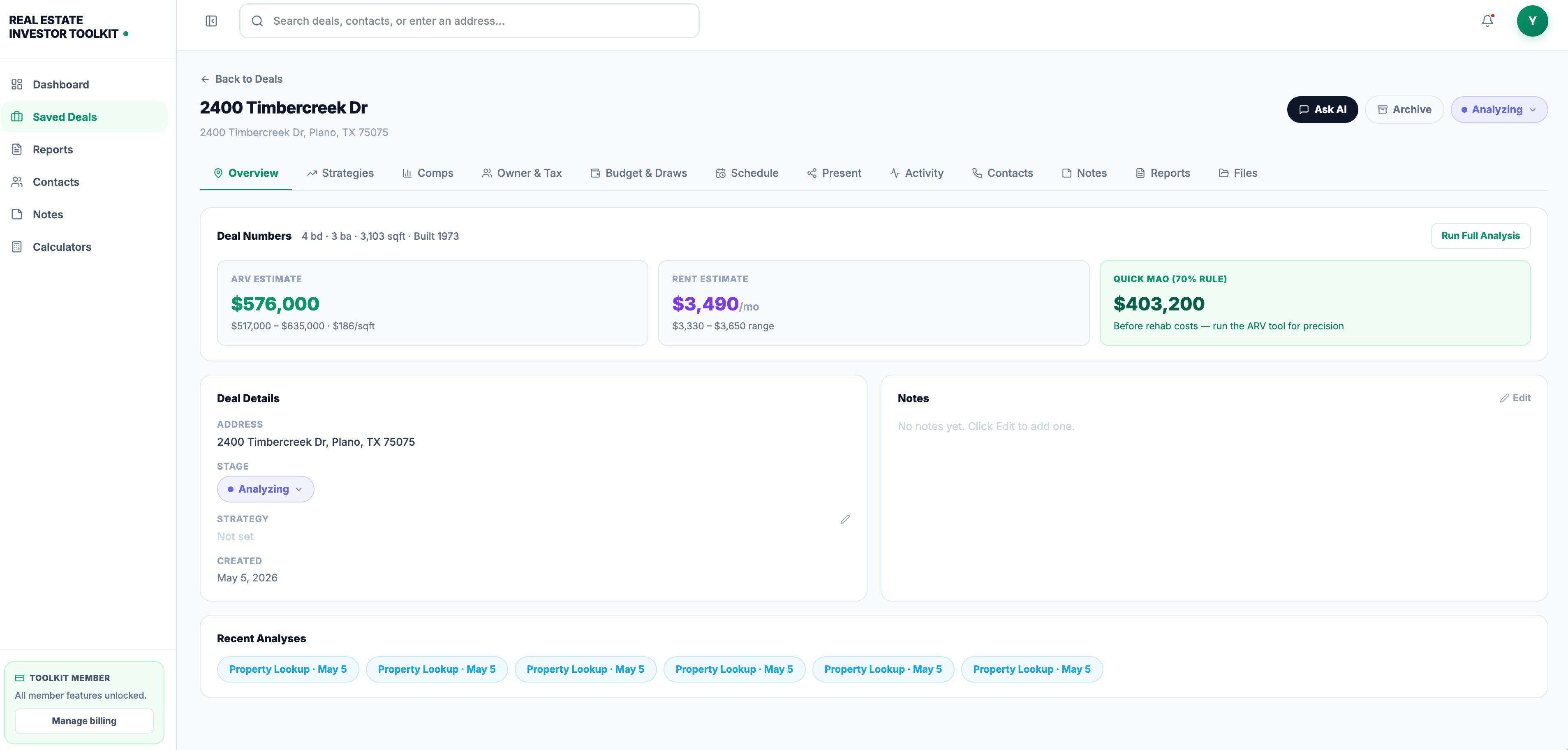
Start with an address or a set of comps, add your component list and RUL estimates, and the tools will produce a reserve schedule and rehab budget you can hand to a lender or contractor. You can begin at the free tools landing page in about 15 to 30 minutes, and upgrade to the paid plan at a monthly price when you need saved reports and unlimited property data.
Where to go for official guidance on useful life and reserves
For the source numbers behind your schedule, consult HUD’s CNA e-Tool and EUL table for standard component lifespans, and Fannie Mae’s replacement reserve guidance for how reserves get funded and documented during underwriting.
Sources
- Multifamily guide (replacement reserve and PCA guidance)
- HUD — Capital Needs Assessment materials and CNA e-Tool
- Fannie Mae servicing and replacement reserve guidance (replacement reserve administration)
FAQ
What is capital expenditure planning for a rental property?
Capital expenditure planning is the process of listing a property’s major systems, estimating how many years each has left, and budgeting the cost and timing of replacing them. It differs from routine maintenance budgeting because it covers big-ticket, infrequent replacements like roofs, HVAC systems, and major plumbing or electrical work.
How do I estimate remaining useful life for an older component?
Start with the default value from HUD’s EUL table, then adjust it up or down based on the component’s documented age and observed condition. Confirm age with permits, invoices, or manufacturer labels whenever possible, and note your reasoning if you deviate from the standard.
How much contingency should I add to a rehab budget?
Raise the contingency further whenever concealed conditions, like what is behind a wall or under a foundation, cannot be confirmed before work starts.
How do reserves for replacement work in underwriting?
Underwriting frameworks such as Fannie Mae’s require a replacement reserve to cover anticipated capital costs through the sooner of two years past mortgage maturity or twelve years after origination, based on a property condition assessment. The reserve is a time-phased funding plan rather than a flat monthly assumption, so it should be built directly from your component schedule.
Which calculators help me turn a capex schedule into a rehab budget?
An ARV calculator establishes your after-repair value from comps, a rehab cost calculator turns your component list into trade-level cost lines, and a rental cash-flow calculator shows how the schedule affects returns over time. The Real Estate Investor Toolkit offers all three, along with a BRRRR planner for modeling refinance timing against your reserve schedule.