Investors: Match Builders Risk Insurance to Your ARV

Builders risk insurance is temporary property insurance that protects a structure and materials while they are under construction. Owners, lenders, and general contractors should consider it whenever project value or contract risk makes an uninsured loss too costly to absorb. The policy covers physical damage to the work in progress and materials on hand, but it does not replace general liability coverage or pay for most workmanship defects.
TL;DR:
- Builders risk insurance limits often match the project’s projected finished value, which requires accurate estimates before obtaining a quote.
- Coverage excludes faulty workmanship, design flaws, and delays caused by financing, permitting, or labor shortages, focusing mainly on physical damages.
- Soft cost and delay-in-completion endorsements may have sublimits that are far below the main policy limit, affecting the payout for delays and related expenses.
- Underinsurance frequently results from under-reporting project value or leaving lenders off the policy, underscoring the need for precise valuation and clear insured parties.
- Premiums are primarily driven by project size, complexity, construction materials, duration, and site security measures.
Table of Contents
- What builders risk insurance covers
- Who needs builders risk insurance and when to buy it
- Policy forms, limits, and the endorsements that decide your payout
- What drives the cost of builders risk insurance
- How to choose a policy: a checklist for owners and contractors
- Set realistic limits before you talk to an underwriter
- What most owners get wrong about builders risk coverage
- How the Real Estate Investor Toolkit fits into your insurance prep
- Sources
- FAQ
What builders risk insurance covers
Builders risk policies (also called course of construction insurance) follow the project, not a fixed address. Coverage typically extends to the structure itself, building materials waiting on-site, items in temporary storage, and sometimes materials in transit to the job. Standard commercial property policies are generally written for finished, occupied buildings and are not designed for the shifting risks of an active job site, which is why a dedicated policy usually fills the gap, according to the Insurance Information Institute.
Most builders risk policies are written on an “all-risk” basis, meaning they cover any cause of loss not specifically excluded, rather than a named-peril form that lists only the perils covered. Typical covered events include fire, theft, vandalism, windstorm, and collapse during construction.
- Fire or lightning damage to framing, roofing, or installed systems before occupancy
- Theft or vandalism of appliances, fixtures, or copper wiring staged on-site
- Wind or storm damage to a partially built structure or temporary scaffolding
- Transit losses when prefabricated components are damaged en route to the site
Exclusions matter as much as coverage. Faulty workmanship, design errors, and normal wear are typically excluded, though many forms include a “resulting loss” exception that can allow recovery when a covered peril, like a fire caused by faulty wiring, produces damage beyond the original defect, according to a construction insurance overview.
Who needs builders risk insurance and when to buy it
Lenders often require builders risk coverage before releasing construction financing, since the property itself is their collateral. General contractors, project owners, and homeowners undertaking major renovations all have a stake in protecting the work before it is finished.
- Confirm who needs to be named. Owners, general contractors, and the lender as mortgagee or loss payee should typically all appear on the policy.
- Time the policy to the project, not the calendar. Coverage should start before materials arrive on-site and run through substantial completion, with extensions built in for likely delays.
- Match the policy to the project type. A ground-up build needs full course-of-construction coverage, while a remodel of an occupied home may need an endorsement to an existing property policy instead of a standalone builders risk form.
- Verify mortgagee language. A lender listed incorrectly, or left off entirely, can complicate a claim payout even when the loss itself is covered.
Policy forms, limits, and the endorsements that decide your payout
Builders risk limits are usually set at the completed value of the project, meaning the policy has to reflect what the structure will be worth once finished, not just its value today. Some policies are written for that full projected value from day one, called non-reporting form. Others require the insured to report actual values periodically as construction progresses, known as reporting form, and failing to report accurately can create disputes or underinsurance at the time of a loss, per the Insurance Information Institute.
The ISO Builders Risk Coverage Form is the industry template most insurers build from, and its wording around exclusions, sublimits, and endorsements materially changes what actually gets paid after a loss.
- Soft cost coverage reimburses added interest, taxes, and professional fees caused by a covered delay.
- Delay-in-completion coverage compensates for lost income or added costs when a covered loss pushes back the completion date.
- Expediting expense pays extra costs to speed up repairs and get the project back on schedule.
- Sue-and-labor provisions cover reasonable steps taken to prevent further damage after a loss.
- Off-site and in-transit endorsements extend coverage to materials stored away from the job site or moving toward it.
One court case shows how narrow these forms can read in practice. In Oceanside Pier View v. Travelers, a federal court held that basic builders risk coverage did not apply to the increased cost of completing a portion of a project that was not yet under construction when the loss occurred, leaving the owner dependent on a limited additional-coverage sublimit, according to a case summary from ConstructLaw. Delay-in-completion and soft-cost endorsements typically carry waiting periods and their own sublimits, and they generally respond only to delays caused by covered physical damage, not financing, permitting, or labor shortages, per AGC guidance on construction delay coverage.pdf).
What drives the cost of builders risk insurance
Premiums move with the size and complexity of the project more than anything else. Insurers weigh project value, construction type, expected duration, and how the site is secured before settling on a rate.
- Project value sets the baseline, since the policy limit has to match the completed value of the structure.
- Construction type and materials affect risk. Wood-frame builds generally carry more fire exposure than steel or concrete structures.
- Project duration matters because a longer build extends the window for weather events, theft, and vandalism.
- Site security such as fencing, lighting, and monitored access can influence how an underwriter prices the risk, since protective measures factor into underwriting, per the ISO builders risk form guidance.
- Reporting basis plays a role too. A reporting-form policy can offer more pricing flexibility, but it shifts the burden of accurate valuation onto the insured throughout construction.
A small residential rehab and a large commercial new build sit at very different points on this scale, and any quote should be read as directional guidance rather than a fixed number until the underwriter has full project details. Request quotes from more than one carrier and ask each to spell out its sublimits for soft costs and delay coverage, since those numbers can vary widely even when the base premium looks similar.
How to choose a policy: a checklist for owners and contractors
A good policy is judged less by its headline limit and more by the fine print underneath it. Work through this before signing anything.
- Confirm the policy form. Know whether you are getting all-risk or named-peril coverage, and read the exclusions closely.
- Check the declared value method. Reporting versus non-reporting changes both your ongoing obligations and your claim exposure.
- Review named insureds and mortgagee wording. Every party with a financial stake in the project should be listed correctly.
- Examine endorsements and sublimits. Soft costs, delay-in-completion, and expediting expense often carry sublimits far below the main policy limit.
- Ask about deductibles and anti-concurrent causation clauses. These clauses can reduce or deny payment when a covered and an excluded cause combine to produce a loss.
Ask your agent directly how often you need to report values, who is named on the delay-in-completion endorsement, and how “expediting expense” is defined in the policy. Watch for red flags like a soft-cost sublimit that looks token compared to project size, missing in-transit coverage for prefabricated materials, or vague reporting requirements that leave you guessing what to submit and when. Coordinate builders risk with your general liability policy and any contract-mandated insurance clauses so the two don’t leave a gap between them.
Pro Tip: Ask for the endorsement schedule in writing before binding, not just a summary of limits.

Set realistic limits before you talk to an underwriter
Underinsurance usually starts with a guess. Running your numbers through an ARV calculator and a rehab cost estimator before requesting quotes gives you a defensible completed value to declare, instead of a rough estimate that leaves you short at claim time.
- ARV calculations establish what the finished property should be worth, which anchors your policy limit conversation.
- Rehab cost estimates flag scope items, like structural work or major systems replacement, that change your risk profile and your premium.
- The underwriting checklist for preventing rehab overruns surfaces the same cost blind spots insurers ask about, before you’re on the phone with an agent.
Run a rehab estimate first, adjust your declared value if the scope grew, then bring both numbers to your insurance conversation.
What most owners get wrong about builders risk coverage
The recurring failures are predictable: under-reporting project value, ignoring soft-cost sublimits until a delay hits, and leaving lenders off the policy entirely. The fix is a habit, not a lecture: run a completed-value check with a calculator and confirm named insured status before you bind coverage.
— Michael
How the Real Estate Investor Toolkit fits into your insurance prep
You don’t need another subscription to buy the right builders risk policy, but you do need accurate numbers before an agent can quote one properly. The Real Estate Investor Toolkit gives you free, no-sign-up calculators built for exactly this kind of prep work.
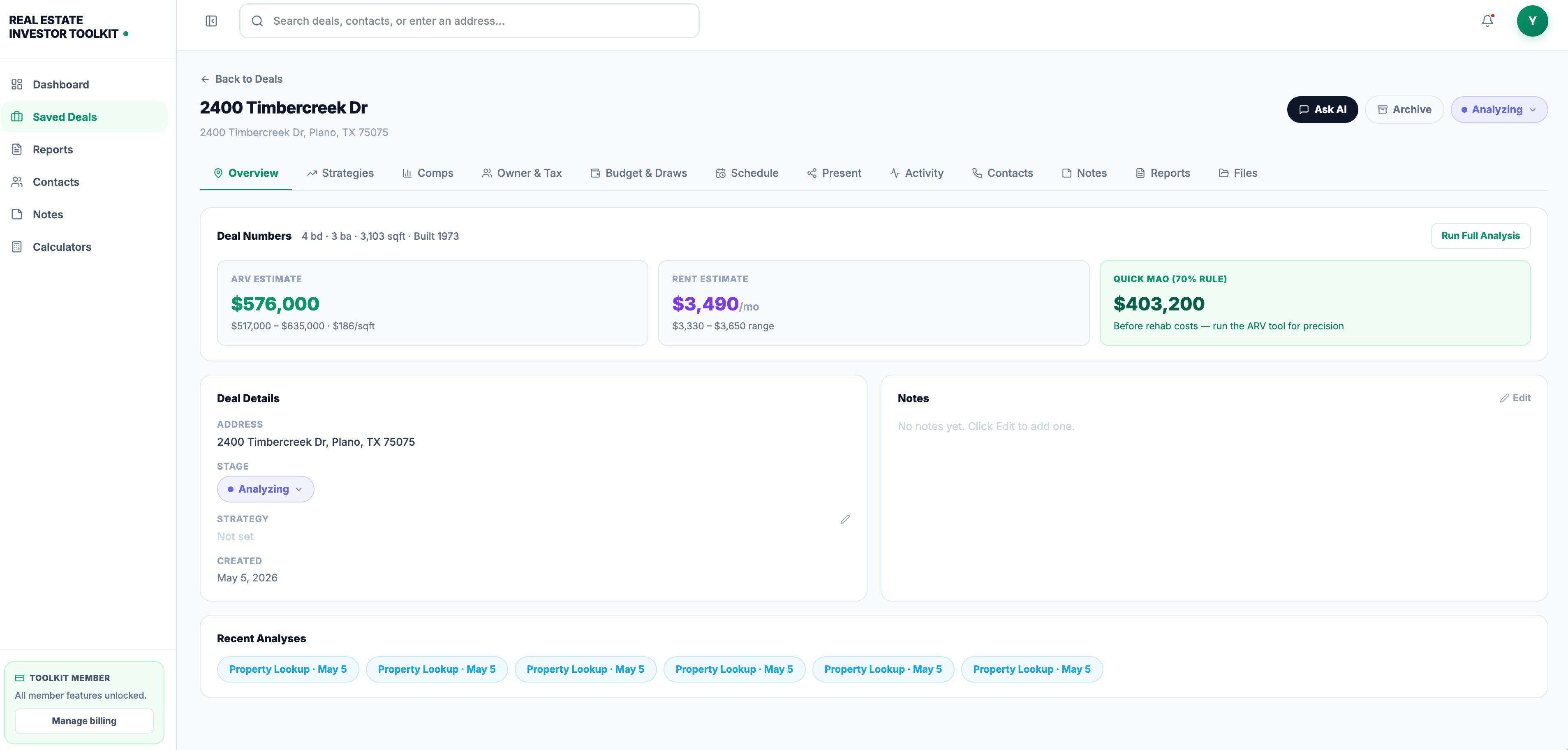
Run the rehab cost calculator to build a realistic scope and budget, then use it alongside the BRRRR calculator if you’re refinancing after completion, since project timelines feed directly into delay-in-completion exposure.
| Tool | What it does | Maps to |
|---|---|---|
| Rehab Cost Calculator | Estimates renovation scope and cost | Declared completed value |
| BRRRR Calculator | Models refinance timeline and holding period | Policy period and delay coverage |
| Underwriting Checklist | Flags common rehab cost overruns | Exposures that affect premium |
These tools sharpen your valuation. They don’t place a policy: that part still runs through a licensed agent who can bind coverage and negotiate endorsements on your behalf. Once your numbers are solid, the Real Estate Investor Toolkit plan at $39.99 per month adds unlimited reports and saved deal pipelines if you’re managing more than one project at a time.
Sources
- Construction Contractors | III
- ConstructLaw: US District Court holds basic builders risk coverage inapplicable to increased cost of completing portion of project
FAQ
How much should a builder’s risk policy cost?
Cost depends on project value, construction type, duration, and site security, so there is no single expected rate. Ask multiple insurers for quotes based on your declared completed value and compare how each prices soft-cost and delay-in-completion sublimits, since those often explain the biggest gaps between quotes.
Who typically buys builder risk insurance?
Project owners, general contractors, and lenders financing the build are the most common parties involved, with lenders often requiring proof of coverage before releasing funds. Homeowners taking on major renovations may also need a policy or an endorsement, depending on the scope of work.
Is builders risk insurance necessary?
It’s necessary whenever a standard property policy would leave a construction project uninsured, which is most new builds and major renovations, since standard policies are typically not designed for active job sites, according to the Insurance Information Institute. Lenders frequently make it a condition of financing regardless of whether it feels optional to the owner.
What does builders risk insurance not cover?
It generally excludes faulty workmanship, design errors, and normal wear, though a “resulting loss” exception can allow recovery when a covered peril, like fire, causes damage beyond the original defect. It also typically won’t cover delays caused by financing, permitting, or labor issues, even under a delay-in-completion endorsement, per AGC’s guidance.