Stop BRRRR Appraisal Stalls: HUD/Fannie Checklist and a 10% ARV Test

Appraisal risk is the single biggest reason BRRRR refinances stall, and it usually comes down to one preventable cause: the appraiser’s value assumptions don’t match yours. The fix isn’t luck. It’s underwriting conservatively from day one and handing the appraiser a documented packet before the report gets written. Run every deal assuming the appraisal lands below your target ARV, and you’ll rarely get trapped holding cash you can’t pull back out.
TL;DR:
- Ensure all permits are closed before ordering the appraisal to avoid flags that can lead to lower property valuation.
- Model deals with a conservative ARV at least 5% to 10% below your target to prevent overestimating refinancing proceeds.
- Provide a comprehensive appraiser packet with detailed scope, before-and-after photos, and comparable sales to support valuation.
- Correct any measurement, room, or rent inaccuracies early, and file a Reconsideration of Value with specific missing comps if the appraisal is low.
- Run multiple analysis scenarios before making offers to verify your deal can withstand lower appraisals without losing profitability.
Table of Contents
- What Causes BRRRR Appraisal Issues at Refinance?
- How Do Appraisers and Lenders Actually Determine Value?
- Steps to Prevent Appraisal Problems Before You Refinance
- What Should Go in an Appraiser Packet?
- What to Do When the Appraisal Comes In Low
- Underwriting Guardrails That Absorb Appraisal Variance
- How Calculators and Documentation Reduce Appraisal Variance
- An Editorial Take on Appraisal Risk in BRRRR
- Run the Numbers Before You Make Your Next Offer
- Where to Verify Appraisal Standards Yourself
- Sources
What Causes BRRRR Appraisal Issues at Refinance?
Most BRRRR appraisal issues trace back to a handful of repeat offenders. Once you know the pattern, you can usually spot which one applies to your deal before the appraiser ever walks through the door.
- Weak or conservative comps. If renovated-to-renovated sales are scarce in your radius, the appraiser defaults to unrenovated comps that undervalue your finished product.
- ARV assumptions versus as-complete reality. Your ARV modeled the finish level you planned. The appraiser only credits what’s actually done and visible on inspection day.
- Open permits or unfinished fringe work. A single open permit can flag the file and push the appraiser toward valuing the property “subject to completion,” which usually means a lower number.
- Square footage and room-count mismatches. Measurement errors or a bedroom that doesn’t meet egress requirements can shrink your comparable pool overnight.
- Rents that aren’t stabilized. DSCR and income-approach refinances lean on in-place rents, not the pro forma number you used to pitch the deal.
- Seasoning too short. Refinance too fast after purchase, and there’s no market evidence yet showing the property is worth more than you paid.
Any one of these can single-handedly kill capital extraction. Several stacked together are what turn a solid BRRRR deal into a cash trap.
How Do Appraisers and Lenders Actually Determine Value?
Appraisers don’t estimate value off vibes. They follow a defined process, and understanding it tells you exactly which levers move the number.
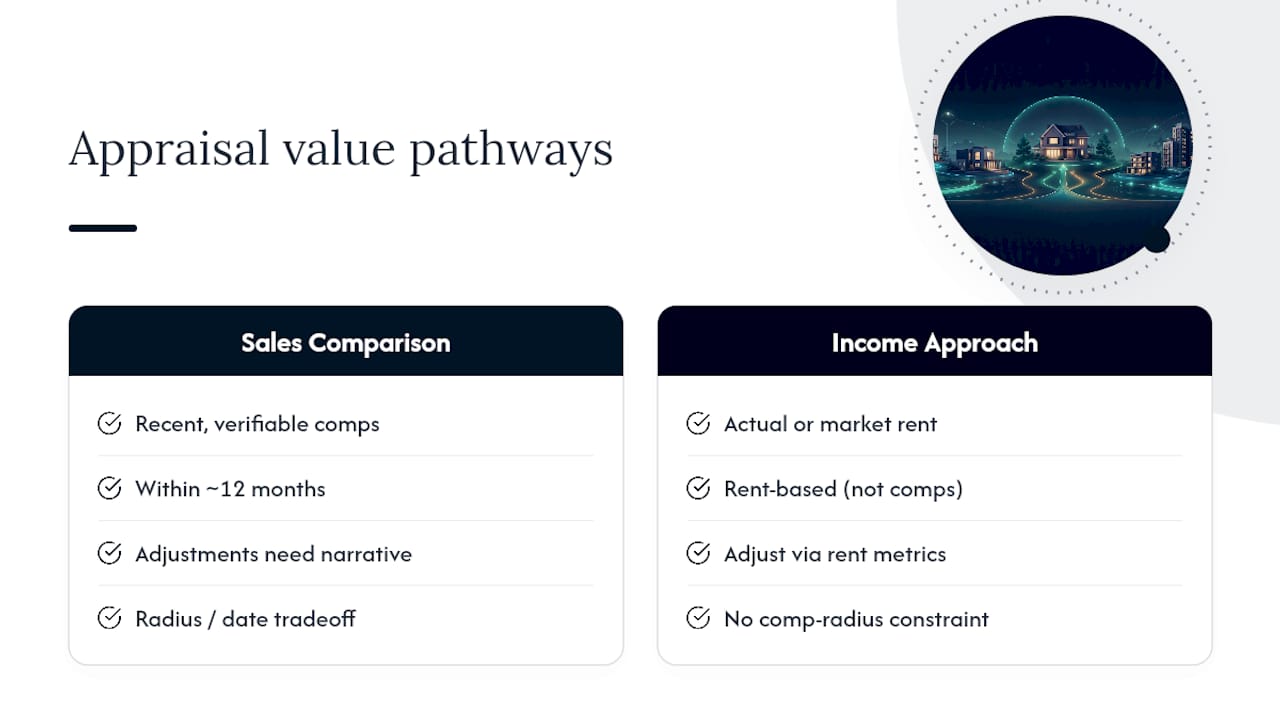
The sales-comparison approach dominates most residential refinances. Fannie Mae’s appraisal guidance requires appraisers to use recent, verifiable comparable sales, generally within the past 12 months, and to explain any large adjustments in a narrative format rather than a black box. That means an appraiser who can’t find enough renovated comps within that window has to either widen the search radius, reach further back in time, or lean on inferior comps, and any of those choices tends to drag the value down.
Fannie Mae’s guidelines cap how far an appraiser can stretch an adjustment before it needs a written explanation. That single rule explains why a property with unusual upgrades (a finished basement conversion, a garage-to-ADU flip) often appraises lower than the investor expects: the comp pool simply doesn’t support the premium.
Income-approach analysis matters more for DSCR and small multifamily refinances, where the appraiser weighs actual or market rent rather than resale comps. HUD’s FHA appraisal handbook also requires appraisers to note the effective date of the report and base value on completed repairs when applicable, meaning a report ordered before your rehab is fully done can legally reflect an unfinished property. Lender program rules add another layer. FHA, conventional secondary-market standards, and portfolio DSCR lenders each set their own comparable and reporting requirements, and an appraiser working under one program’s rules can’t simply borrow flexibility from another.
Steps to Prevent Appraisal Problems Before You Refinance
Prevention starts long before the appraiser gets the assignment. Build these habits into your BRRRR workflow and you’ll cut appraisal surprises dramatically.
- Underwrite at a conservative ARV. Model your numbers assuming the appraisal comes in 5% to 10% below your target ARV, not at it. If the deal still cash-flows and still lets you pull out most of your capital at that lower number, you have real margin.
- Buy deeper than you think you need to. Industry analysis on 2026 BRRRR underwriting makes the case plainly: the spreads that worked in 2021 don’t survive today’s appraisal environment, and investors who shifted to bigger purchase discounts preserved capital when appraisals came in soft.
- Close every permit before the appraisal is ordered. An open permit or an unpermitted addition is one of the fastest ways to get flagged. Ohio REALTORS’ guidance on appraisal timing is direct on this point: order the appraisal after final inspections, not before.
- Document or stabilize your rent roll. If you’re refinancing into a DSCR product, get a signed lease in place or gather comparable rent listings before the appraiser needs them.
- Keep before-and-after photos and contractor invoices organized as you go. Don’t wait until refinance week to reconstruct your renovation story.
Lender-side analysis of BRRRR refinance failures points to the same three culprits over and over: overestimated ARV, insufficient rent, and underbudgeted rehab. Fix those three inputs and most appraisal surprises disappear before they start.
Pro Tip: Take your after-repair photos on the same day you finish each major scope item, not weeks later. Timestamped photos organized by trade (roof, kitchen, bath, mechanicals) make the appraiser packet assemble itself instead of becoming a scramble the week before your refinance appointment.

What Should Go in an Appraiser Packet?
A well-built packet doesn’t guarantee a higher number, but it removes the guesswork that pushes appraisers toward the conservative side of their range. Give the appraiser (or the lender, who often forwards it) everything they’d otherwise have to dig for themselves.
- A line-item scope of work with closed permit numbers and contractor signatures attached.
- Before-and-after photos keyed directly to each line in the scope, not a random photo dump.
- Three renovated comparable sales you’ve pulled yourself, each with the sale date and a short note on why it’s comparable.
- A current lease abstract or rent roll, plus supporting market rent evidence like active listing screenshots or a local rent report.
- The original purchase appraisal, if you have one, and the property’s prior sales history.
- A short, factual cover letter noting anything unusual: a permit that took longer than expected, a structural fix that added value, a room reconfiguration.
| Packet Item | Why It Matters | Who Provides It |
|---|---|---|
| Scope of work + closed permits | Confirms completed, code-compliant work | You / contractor |
| Before/after photos | Visual proof matching the scope | You |
| Renovated comps (3) | Anchors value to similar finished properties | You / comps tool |
| Rent roll or lease abstract | Supports income-approach value | You / property manager |
| Cover letter | Explains anything atypical in plain language | You |
Practitioner discussions on BiggerPockets’ appraisal forum back this up: investors who hand over specific renovated comps and photo-documented scope tend to see fewer low-ball surprises than those who let the appraiser build the file from scratch.
What to Do When the Appraisal Comes In Low
A low number doesn’t have to be final. Work through these steps in order, since each one either resolves the issue directly or sets up the next fallback.
- Review the report line by line first. Check the comps chosen, the adjustments made, and the square footage listed against your own records. Numeric and factual errors are more common than people assume, and they’re the fastest fix.
- File a data-driven Reconsideration of Value (ROV). Generic complaints rarely move an appraiser. Submitting specific comps they missed, with dates and sources, works far better. Fannie Mae’s own guidance on reconciliation logic supports why concrete comparable data outperforms a general appeal, and industry reporting on ROV baseline success rates puts the odds at roughly 24% for a typical unassisted appeal, a number that climbs meaningfully once you supply the missed comps yourself.
- Ask your lender about a second appraisal or a different loan program. DSCR lenders and conventional lenders weigh income and comps differently; sometimes the fix is a different underwriting box, not a new appraiser.
- Cover the gap short term. Bringing cash to close, extending your bridge loan, or renegotiating your payoff terms on the existing financing can all buy time without killing the deal.
- Know when to walk away from a stuck deal. If the gap is large and your capital is better deployed on the next opportunity, funding a shortfall to save one property isn’t always the right call.
Underwriting Guardrails That Absorb Appraisal Variance
The investors who stop losing sleep over appraisals aren’t the ones who get lucky. They’re the ones who built the variance into the model before they ever made an offer.
- Model every deal at ARV multiplied by 0.90, or apply a fixed dollar buffer, and check whether refinance proceeds still work at that lower figure.
- Use in-place rents as your baseline, adding projected rent increases only when you have a signed lease or hard comparable data to back it up.
- Build in rehab contingency and a timeline buffer. Carrying costs stack up fast when a project runs long, and that erodes the margin you were counting on at refinance.
- Buy deeper on the front end. A lower purchase price is the most reliable form of appraisal insurance you can create.
- Track seasoning windows at both the deal level and the portfolio level, since different lenders and programs set different minimum hold periods before they’ll count a refinance value.
Pro Tip: Run two versions of every deal analysis, one at your target ARV and one at ARV minus 10%. If the second version still returns most of your capital, you’ve built a deal that survives a disappointing appraisal instead of depending on a generous one.
For a deeper walk-through of how refinance risk compounds across a full BRRRR cycle, the guide to underwriting refinance risk breaks down the math stage by stage.
How Calculators and Documentation Reduce Appraisal Variance
Every checklist above gets easier when your numbers are already organized before the appraiser shows up. That’s the practical link between disciplined underwriting and the tools you use to build the deal.
- Run your ARV calculator early to build a conservative ARV range backed by a justified comp set, not a single optimistic number.
- Export a line-item rehab schedule from the rehab cost calculator that mirrors your contractor invoices dollar for dollar.
- Use the BRRRR calculator to simulate refinance proceeds across several appraisal outcomes before you ever make an offer.
- Pull comps through the comps analyzer to assemble the renovated sales evidence your appraiser packet needs.
Printed together, scope, photos, cost backup, and comps become the exact packet a lender or appraiser can act on, and the same file works again if you ever need to file an ROV.
An Editorial Take on Appraisal Risk in BRRRR
Most of the “low appraisal” horror stories investors trade at meetups share a common thread: someone skipped a step they knew mattered. I’ve read enough forum threads and case write-ups to notice the pattern repeats almost exactly. An investor orders the appraisal before the last permit closes, gets valued on unfinished conditions, panics, and only then assembles the comps and photos they should have had ready weeks earlier. The ones who recover fastest are the ones who treat the appraiser packet as paperwork they build during the rehab, not paperwork they scramble for afterward.
The bigger lesson isn’t about appraisals at all. It’s about deal volume. Investors chasing five marginal deals a year get burned by appraisal variance far more often than investors running two deals underwritten with real margin. Build the packet into your standard process for every project, and appraisal risk stops being a threat and starts being a line item you’ve already priced in.
— Michael
Run the Numbers Before You Make Your Next Offer
This article recommends conservative scenario testing to evaluate your deal assumptions without a signup wall standing between you and the numbers. Instead of guessing whether your deal survives an appraisal that lands under ARV, run it both ways in minutes.
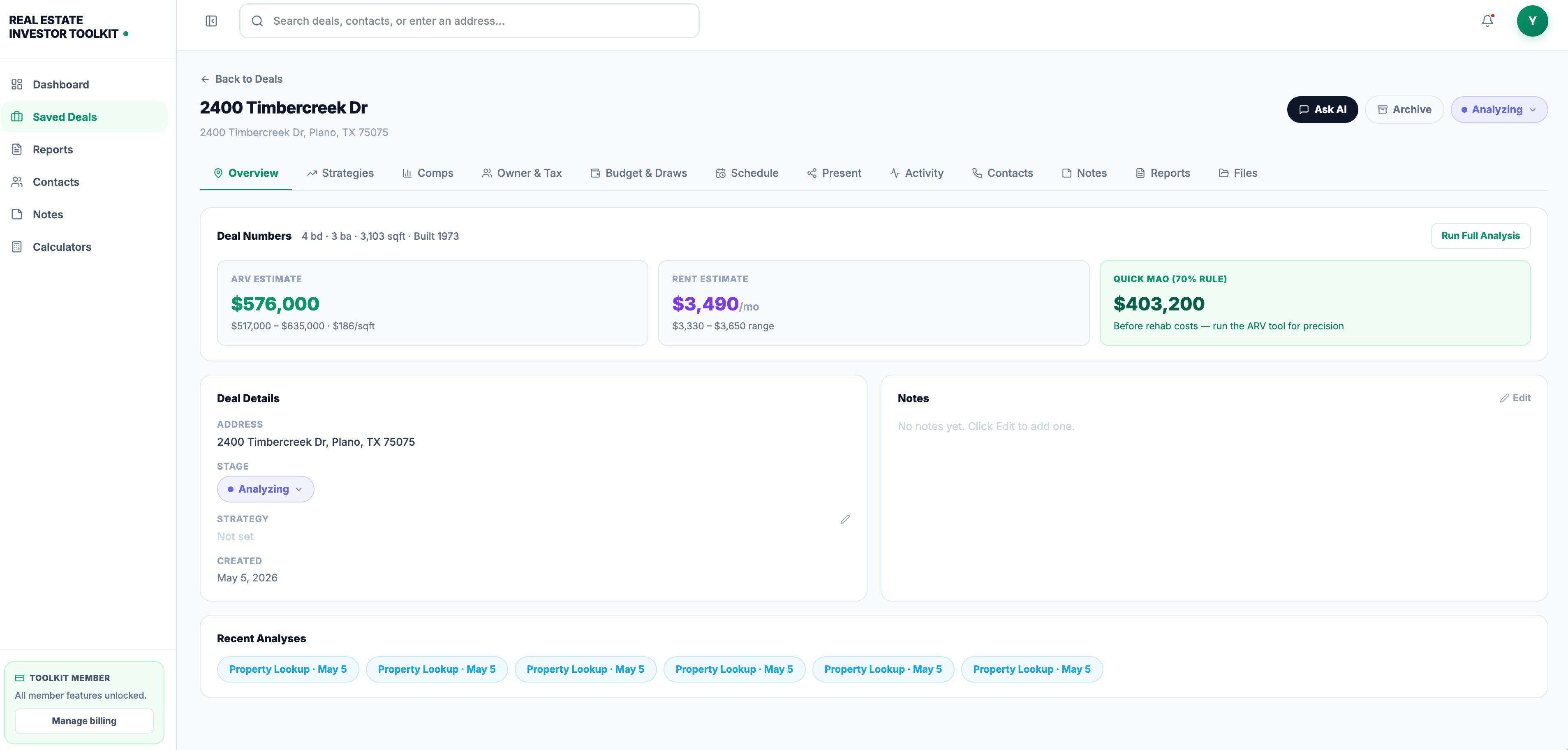
Start with the ARV calculator to pull a justified comp set, then move to the rehab cost calculator to build a line-item budget that matches your contractor invoices. From there, the BRRRR calculator models your refinance proceeds at full ARV and at a 10% haircut side by side, so you know before you make an offer whether the deal still returns your capital if the appraisal disappoints. Every calculator runs free with no account required, and you can export the output straight into the appraiser packet you build later. Test your next deal against a conservative appraisal scenario before you get attached to the optimistic one.
Where to Verify Appraisal Standards Yourself
For the rules governing your own refinance, go straight to the source rather than relying on secondhand summaries. The HUD FHA appraisal handbook covers scope, repairs, and effective-date rules for FHA-backed loans. Fannie Mae’s appraisal guidance details comparable sales and reconciliation requirements used across most conventional refinances. If you’re vetting a lender or loan officer before you commit to a refinance program, NMLS Consumer Access lets you confirm licensing in seconds. For tax questions tied to refinance proceeds, IRS Publication 527 covers rental property treatment directly.
This article is general information, not a substitute for advice from a qualified financial advisor. Consult a qualified financial professional about your own circumstances before acting on anything here.
Sources
- HUD appraisal handbook (FHA appraisal requirements)
- Fannie Mae appraisal guidance (appraisal report and data requirements)
- BRRRR in 2021, Is Not BRRRR in 2026 — Cornerstone CPA
- Ohio REALTORS blog: appraisal standard impacts and inspection timing