Investors: Avoid Double Payment When Assigning Contracts in U.S. Law

An assignment contract lets one party, the assignor, transfer their contractual rights to another party, the assignee, who then holds those rights against the original obligor. Assignment usually moves rights to the assignee, but it does not automatically free the assignor from their existing duties or liability under the contract. Contract wording and the governing state’s rules can change that outcome, so read the original agreement closely before you assume anything transfers cleanly.
TL;DR:
- An assignment transfers only contractual rights and does not automatically release the assignor from existing duties unless explicitly released via a novation or written agreement.
- Anti-assignment clauses, personal service restrictions, and statutory rules can limit or block transfer of contract rights, especially if they significantly alter obligor risk.
- Proper notice under UCC §9-406 is critical to avoid double payment risks and to ensure the assignee can enforce payment collection rights.
- The enforceability and legality of an assignment depend on the specific contract language, state laws, and whether the assignment conforms to legal and procedural requirements.
- Using written agreements, proof of assignment, and prior legal or title review helps prevent disputes and liabilities in assignment transactions.
Table of Contents
- What assignment really means: assignor, assignee, and obligor
- How assignment works in real estate purchase agreements
- The legal limits: UCC rules and anti-assignment clauses
- Why double payment and lingering liability catch people off guard
- Building the assignment agreement: what to include before you sign
- Using deal-analysis tools to vet assignment opportunities
- Leases, service agreements, and licenses: assignment beyond real estate
- What happens when an assignment is improper or unauthorized
- How assignment changes performance and enforcement
- Why the rules shift depending on where you are
- When assignment makes sense, and when it doesn’t
- Running the numbers before you assign a contract
- FAQ
- Sources
What assignment really means: assignor, assignee, and obligor
Three roles drive every assignment. The assignor is the party giving up their contract rights. The assignee receives those rights and, under the “stand in the shoes” rule, can enforce them against the obligor, the party who owed performance under the original deal, exactly as the assignor could have. The assignee gets no better rights than the assignor had, and the obligor can raise the same defenses against the assignee that it could have raised against the assignor.
Assignment and delegation are not the same thing, even though people use the words loosely.
- Assignment transfers rights, like the right to receive payment or take title.
- Delegation transfers duties, like the obligation to perform a service or close on a purchase.
- Novation replaces one party with another entirely, requiring the original obligee’s consent and ending the departing party’s duties.
The rule of thumb worth memorizing: assignment hands over enforceable rights, but it takes a novation, or an express written release, to actually cut the assignor’s liability. Without one, the original party can still get a call demanding performance long after they thought they walked away.
How assignment works in real estate purchase agreements
In a typical wholesale or investor deal, assignment follows a predictable sequence rather than a chaotic one.
- The investor (assignor) signs a purchase agreement with the seller, securing contract rights but not title.
- The investor markets that contract position to other buyers, often during an inspection or due-diligence period.
- A buyer (assignee) agrees to take over the contract and pays an assignment fee for that position.
- The parties sign an assignment agreement spelling out the fee, effective date, and any consents needed.
- The assignee closes directly with the original seller, using the same purchase terms the assignor negotiated.
The assignee never buys the property from the assignor. They buy the contractual right to buy it, then close under the original terms, which is why real estate attorneys sometimes call this a transfer of “equitable interest” rather than a transfer of title. According to Nolo’s explanation of assignment basics, the assignment fee itself, along with how it gets taxed and documented, varies by the specific contract language and the state where the property sits.
Three checks protect everyone involved: confirm how earnest money gets handled if the deal falls through, verify the inspection and termination windows are still open when the assignment happens, and put the assignment terms in writing rather than relying on a verbal handshake.
Pro Tip: Run your wholesale offer and assignment-fee numbers before you sign the original purchase agreement, not after you’ve already committed to a price.
The legal limits: UCC rules and anti-assignment clauses
Contract rights are generally assignable, but several legal guardrails can block or complicate a transfer. UCC §2-210 permits delegation of performance unless the contract itself or the other party’s substantial interest in personal performance prevents it, and critically, delegating a duty does not relieve the delegating party of liability if the delegate fails to perform.
Courts applying this section lean on what is often called the material-change test: can the obligor’s duty be performed just as easily by the assignee as by the original party, without increasing the obligor’s risk or burden? If yes, assignment usually stands even against a general objection. If the assignment would materially change what the obligor bargained for, courts are far more likely to block it.
- Many contracts include anti-assignment clauses barring transfer without written consent.
- Courts often read these clauses narrowly, sometimes allowing assignment of payment rights even when duties cannot be delegated.
- Personal service contracts, where the specific person’s skill or identity matters, are frequently non-assignable.
- Certain statutory rights carry their own assignment restrictions regardless of what the contract says.
UCC §9-406 governs what happens on the payment side. UCC §9-406 allows an account debtor to discharge its obligation by paying the original assignor right up until it receives authenticated notice of the assignment. After that notice arrives, payment generally has to go to the assignee instead, and the assignee may need to provide reasonable proof of the assignment if the debtor asks for it.
Why double payment and lingering liability catch people off guard
Two risks surface more than any others in assignment disputes, and both are avoidable with the right paperwork.
- Double payment risk: Until an account debtor gets authenticated notice under UCC §9-406, paying the original assignor can still legally discharge the debt, even if the assignee never sees a dime.
- Continued assignor liability: Absent an express release or novation, the assignor typically remains on the hook if the assignee fails to perform, which means a wholesaler who assigns a contract can still get sued if the end buyer walks.
- Assignee collection exposure: If the assignee cannot produce reasonable proof of assignment when asked, the obligor may keep paying the wrong party and the assignee bears the cost of untangling it.
The fixes are straightforward. Pair every assignment with a written consent and release when the goal is to cut the assignor loose entirely. Hold the assignment fee in escrow until the deal closes rather than collecting it upfront. Add an indemnity clause covering the assignor if the assignee defaults, and keep a clear proof-of-assignment packet ready in case the obligor asks for it.
Pro Tip: When a deal involves a mortgage payoff, title concerns, or an unusually large assignment fee, loop in a title or escrow professional, or an attorney, before signing anything.
Building the assignment agreement: what to include before you sign
A usable assignment agreement is shorter than most people expect, but it has to cover specific ground.
- Identify and attach the original contract being assigned, in full.
- State precisely which rights transfer, and whether any duties are being delegated too.
- Set an effective date for the assignment.
- Spell out the assignment fee amount, timing, and how it’s paid or escrowed.
- Include any required consents from the obligor, and a release if the assignor wants out of future liability.
- Add notice instructions so the obligor knows where payments or performance should go.
- Get signatures from the assignor and assignee, and the obligor’s consent where the contract requires it.
Watch the original purchase agreement for an anti-assignment clause or language requiring the obligor’s consent before you market the deal. Phrases like “and/or assigns” after the buyer’s name are a green light for assignment; their absence is a reason to check further. If the goal is releasing the original party entirely rather than just transfer rights, that calls for a documented novation, not a simple assignment, and the paperwork looks different because the original obligee has to consent to the substitution.
Using deal-analysis tools to vet assignment opportunities
Before marketing a contract for assignment, the math has to work for both you and the next buyer. After-repair value (ARV), maximum allowable offer (MAO), rehab costs, and holding costs all feed into a fair assignment fee, one that leaves real margin for the assignee instead of just looking good on paper.
A simple workflow: pull comparable sales to anchor ARV, calculate MAO from that number, estimate rehab and holding costs, then back into the maximum fee the deal can support. Quick calculators cut down on overbidding and on assignors who misjudge what profit is actually left on the table.

Leases, service agreements, and licenses: assignment beyond real estate
Assignment shows up well outside property deals, and the same core rules apply even though the subject matter changes.
Leases are commonly assigned, letting a tenant transfer their remaining lease term to a new tenant, though most commercial and residential leases require landlord consent and many include anti-assignment language specifically to prevent unapproved subletting or transfer.
Service agreements, from consulting contracts to vendor deals, get assigned when a business changes hands or restructures. These often hinge on whether the service is personal in nature. A contract for a specific consultant’s expertise is far less assignable than a contract for a company’s general service, because the obligor bargained for a particular person’s skill.
Intellectual property licenses carry their own wrinkles. Patent and trademark licenses frequently include explicit anti-assignment terms because licensors want control over who uses their intellectual property, and unauthorized assignment can trigger termination rights built into the license itself.
Loan and financing agreements sometimes allow assignment of the lender’s rights to collect payment, which is common in the secondary mortgage market, while the borrower’s duty to repay rarely transfers without the lender’s direct involvement.
Across all of these, the same question recurs: does transferring this right change what the obligor bargained for, and does the contract or statute say anything about consent. Those two questions resolve most assignment disputes before they reach a courtroom.
What happens when an assignment is improper or unauthorized
An assignment made in violation of a valid anti-assignment clause, or without required consent, does not automatically make the whole underlying contract void, but it creates real exposure. The obligor can often refuse to recognize the assignee and continue dealing only with the original party, leaving the would-be assignee without a direct claim against the obligor.
The assignor can also face a breach claim from the original obligee for violating the contract’s assignment restriction, separate from whatever arrangement the assignor made with the assignee. That breach claim can carry damages even if the assignee never gets anything from the obligor at all.
There is a narrower problem on the payment side. If an assignee tries to collect under UCC §9-406 without providing reasonable proof of assignment when the obligor requests it, the obligor can keep paying the original assignor and still be legally discharged. The assignee’s remedy at that point runs against the assignor, not the obligor, for the misdirected funds. This is one more reason assignments need documentation upfront rather than a scramble after a dispute starts.
Courts generally will not reward an assignee who ignored an obvious anti-assignment clause, and in some fact patterns an obligor can seek to rescind unrelated performance if the unauthorized assignment materially changed its risk. That outcome is fact-specific, which is exactly why a quick legal check before assigning saves far more time than untangling a dispute after the fact.
How assignment changes performance and enforcement
Once an assignment takes effect, the assignee steps into the assignor’s enforcement position, but performance itself does not automatically improve or simplify. The obligor still owes exactly what the original contract specified, no more and no less, and can raise any defense against the assignee that it could have raised against the assignor, including prior breach, payment disputes, or setoff claims.
This matters most when the obligor was not properly notified. Under UCC §9-406, performance directed at the wrong party, meaning payment sent to the assignor after proper notice went out, does not count as valid performance against the assignee’s claim. Enforcement gets messier, not simpler, when notice procedures get skipped.
Delegated duties create a separate enforcement track. If the assignor delegated performance to the assignee and the assignee fails to deliver, the original obligee can generally still pursue the assignor for the resulting breach, since delegation shifts who performs without automatically shifting who answers for nonperformance. That’s the material-change principle at work again: the law lets duties move to someone else’s hands, but it keeps the original party’s name on the liability unless a release or novation says otherwise.
Practically, this means an assignee inherits a contract exactly as it stood, warts included. Any ambiguity in the original agreement, any ongoing dispute with the obligor, any performance shortfall, travels with the assignment. Buying or accepting an assigned contract without reviewing its performance history is a common and avoidable mistake.

Why the rules shift depending on where you are
Assignment law is not one uniform national rule. Common law principles apply to most assignments, Article 2 of the UCC governs contracts for the sale of goods, and Article 9 governs assigned payment rights tied to secured transactions, and which body of law controls can change the outcome of a given dispute, as outlined in this overview of assignment of contract rights.
States layer their own requirements on top of these general rules, particularly in real estate. Some states require specific written disclosures when an investor is assigning equitable interest rather than selling title outright, and licensing rules for people who regularly broker these transfers can vary as well. Because these state-specific disclosure and licensing requirements differ, check your state’s real estate commission guidance or consult a local attorney before relying on a generic assignment template.
The practical lesson is to never assume a rule from one contract type, or one state, applies cleanly to another. A lease assignment, a sale-of-goods assignment, and a real estate purchase-agreement assignment can each trigger a different statute, even when the underlying transaction feels similar on the surface.
When assignment makes sense, and when it doesn’t
Assignment works well when capital is tight, the timeline is short, and the deal is clean. It works poorly when title issues, lender restrictions, or a reluctant obligor are in play. If a seller’s lender has a due-on-sale clause, or the obligor is already signaling resistance, that’s a signal to consider a novation, or walk, rather than force an assignment; see this seller’s real estate checklist on novation timing for details. For anything with real dollars or legal ambiguity attached, a short call with counsel costs far less than fixing a bad assignment later.
— Michael
Running the numbers before you assign a contract
Free calculators are available that let you check the math on an assignment deal before you ever sign a purchase agreement, no account required.
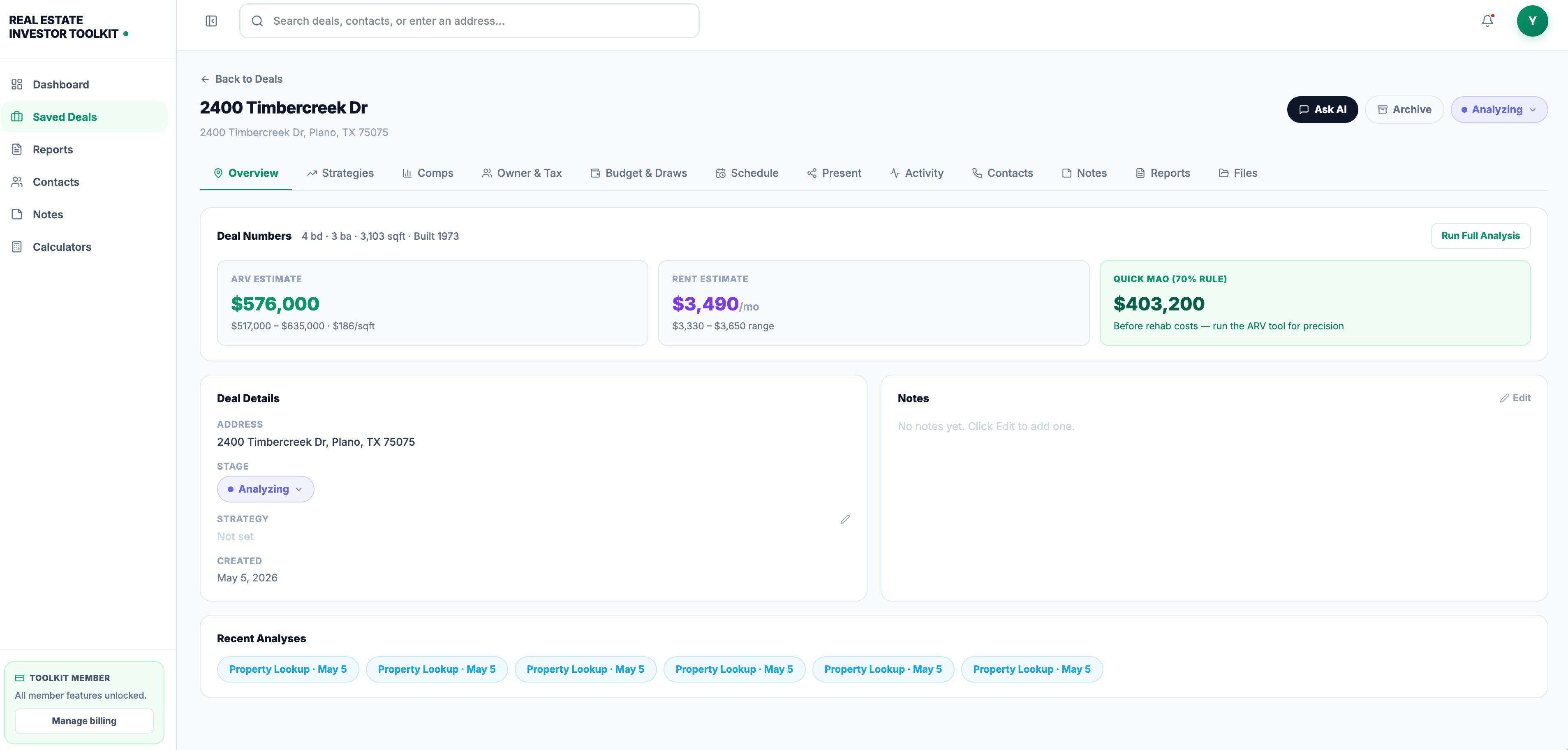
- Use the MAO calculator to set a defensible purchase price before you negotiate the original contract.
- Use the ARV calculator and comps tools to confirm the resale value backing your assignment fee.
- Use the BRRRR calculator when a potential assignee is weighing a hold-and-refinance exit instead of a flip.
Start with the free tools to pressure-test a deal, then explore the Real Estate Investor Toolkit plan at $39.99 per month when you need unlimited reports and saved deal pipelines for an active assignment pipeline.
FAQ
Does the seller have to agree to assignment of contract?
It depends on the original purchase agreement. Many contracts include “and/or assigns” language that permits assignment without further seller approval, while others require written consent or bar assignment outright through an anti-assignment clause.
What are the risks of assignment?
The biggest risks are double payment to the wrong party before proper notice under UCC §9-406, and the assignor remaining liable for the assignee’s nonperformance absent a release or novation. Unauthorized assignment in violation of a contract clause can also trigger a breach claim against the assignor.
What are the two types of contract assignments?
Assignments are generally split into assignments of rights alone, such as the right to receive payment, and assignments that also delegate duties, such as the obligation to perform a service. UCC §2-210 addresses both and notes that delegating a duty does not relieve the delegating party of liability for its performance.
Who pays the assignment fee?
The assignee, the party taking over the contract position, typically pays the assignment fee to the assignor as compensation for that position. According to Nolo, the exact handling and tax treatment of that fee varies based on the contract and the state where the deal takes place.
Sources
- § 2-210. Delegation of Performance; Assignment of Rights. | Uniform Commercial Code | LII
- Assignment of Contract: How It Works, Examples, and Anti‑Assignment Clauses | Nolo
- 12.2 Assignment of Contract Rights – Business Law I – Interactive