Appraisal Grade Workflow to Adjust Comps for Repairs for Investors

Yes, you adjust a comp when its sale price was affected by seller-paid repairs, financing concessions, or a real condition gap between it and the subject property. The defensible way to size that adjustment is paired-sales extraction or another market-based technique, never a straight repair-cost pass-through. Back it up with contract terms, inspection notes, photos, and the market data you used to calculate the number.
TL;DR:
- Adjustments for repairs should be based on market data like paired sales, not straight cost pass-through, and must be backed by documentation.
- Use paired-sales extraction as the preferred method when enough data exists, with cost analysis as a fallback when data is limited.
- Repair adjustments are typically not dollar-for-dollar; market behavior and investor incentives often cause differences between estimates and actual discounts.
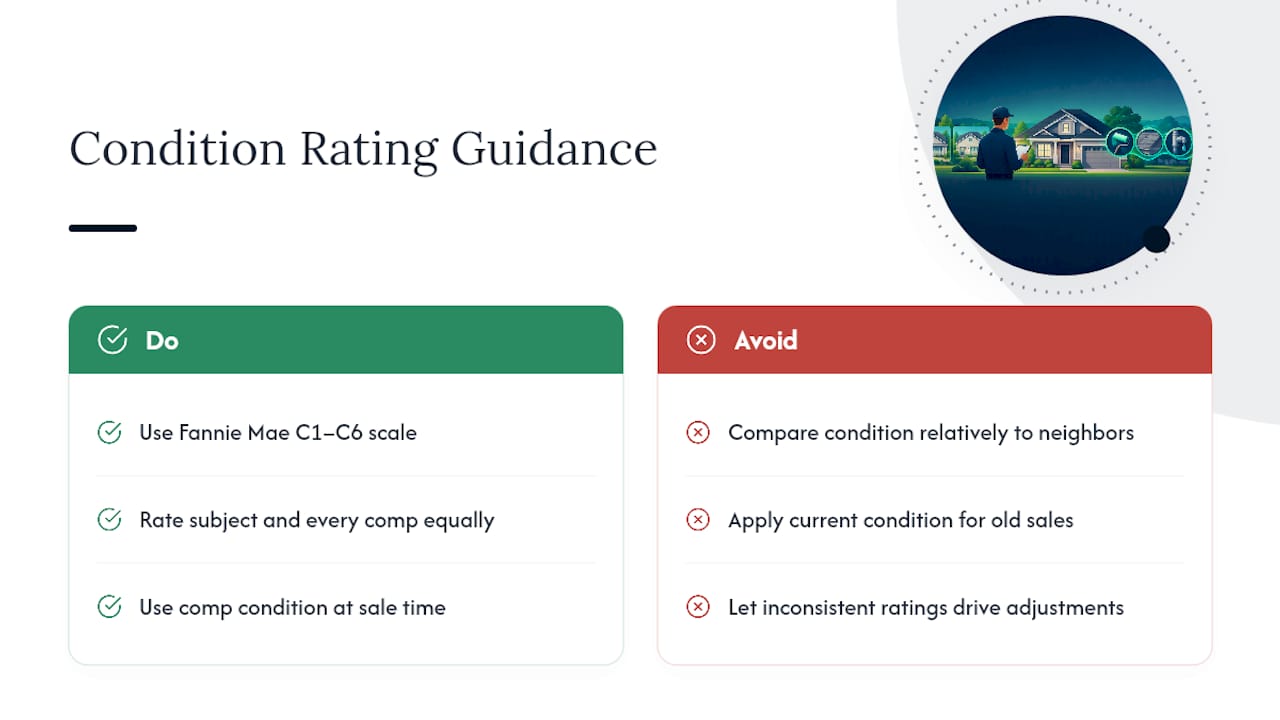
- Condition ratings from C1 to C6 must be applied consistently to all properties and reflect conditions at the time of sale, not current perceptions.
- For quick deal decisions, rough estimates are acceptable if properly documented and flagged as preliminary, with full reconciliation revisited before closing.
Table of Contents
- When Do You Adjust a Comp for Repairs vs. Appraise the Subject “As Repaired”?
- What Techniques Can You Use to Support a Repair Adjustment?
- How Do You Turn a Repair Estimate Into a Market Adjustment?
- Why Do Condition Ratings (C1–C6) Change Your Adjustment Strategy?
- What Belongs in the Adjustment Write-Up or Investor Memo?
- A Five-Step Worksheet for Adjusting Comps
- What Are the Red Flags That a Comp Needs a Bigger Adjustment?
- Speed vs. Defensibility: Where Investors Should Draw the Line
- Run the Numbers Before You Make the Offer
- Sources
- FAQ
When Do You Adjust a Comp for Repairs vs. Appraise the Subject “As Repaired”?
The direction of the adjustment depends on which side of the sale has the condition problem. If the subject property needs work, you’re not adjusting comps at all. You’re choosing between an “as-is” appraisal (value today, in current condition) and a “subject to repairs” or “hypothetical repaired” assignment, which values the property assuming specified work gets done. That’s a scope-of-work decision, made before you ever touch a grid.
Comps only get adjusted when a comparable’s sale price was shaped by something you need to strip out to make it match the subject fairly. That happens in two common scenarios:
- The comp sold with seller concessions (a repair credit, a closing-cost assist tied to inspection findings) that pushed the contract price above true market value.
- The comp had a visibly different condition than the subject at time of sale, and that difference plausibly moved the price.
Fannie Mae’s guidance on adjustments to comparable sales is explicit that any adjustment has to be grounded in market evidence, not a mechanical formula. One flag that changes the whole calculus: a condition rating of C6, which signals safety, soundness, or structural issues serious enough that Fannie Mae requires the appraisal to move to a “subject to completion” basis rather than a simple as-is grid adjustment, per its guidance on property condition and quality of construction. And in markets where concessions are common practice, an appraiser may lean on cash-equivalent sales as the anchor and adjust only the outliers, rather than adjusting every comp in the set.
What Techniques Can You Use to Support a Repair Adjustment?
Four methods carry weight in an appraisal file or a well-built investor memo, and they’re not interchangeable.
- Paired-sales extraction. Find two sales that are close to identical except for the repair or condition difference, then isolate the price gap. The Appraisal Foundation names this the preferred technique when enough data exists, because it measures actual buyer behavior instead of estimating it.
- Statistical or regression analysis. Useful when you have a larger dataset, but it needs a real sample size and careful variable selection. Pulling five comps and running a regression on them produces a number that looks precise and means almost nothing. FHFA’s research on comp counts underscores how thin most residential comp sets actually are, which is exactly why regression gets misused in single-family work.
- Cost analysis. A contractor bid or repair estimate can serve as a fallback when paired data doesn’t exist, but a straight cost figure reflects what it costs to fix something, not what a buyer will actually pay less for it. Treat it as a starting point, not a conclusion.
- Market extraction. Broader than a single pair, this pulls the adjustment from overall market patterns, such as a neighborhood’s typical price gap between updated and unupdated kitchens.
When two methods produce different numbers, reconcile them and say why in the report. Don’t just average them and move on.
Pro Tip: If your paired-sales extraction and your cost estimate land more than 15 to 20 percent apart, that gap is usually a data problem, not a market mystery. Go find a third comp before you reconcile.
How Do You Turn a Repair Estimate Into a Market Adjustment?
A $15,000 repair bid does not automatically mean a $15,000 adjustment. Fannie Mae’s own guidance on comparable adjustments notes that dollar-for-dollar treatment can be acceptable, but only when market analysis actually supports it, and adjustments should generally be at or below what the market indicates. Buyers rarely discount a home penny for penny against a contractor’s invoice. They discount based on hassle, financing friction, and how the repair affects their own plans.

Here’s how that plays out with a roof replacement estimated at $15,000:
That $3,000 gap often reflects an investor-buyer’s entrepreneurial incentive, the built-in profit margin that pushes offers below the pure math. Appraisers generally don’t build that incentive into a comp adjustment. Investors calculating a maximum allowable offer or after-repair value absolutely should, which is one of the clearest lines between appraisal practice and MAO/ARV modeling.
Why Do Condition Ratings (C1–C6) Change Your Adjustment Strategy?
Fannie Mae’s C1 through C6 condition scale rates a property on an absolute basis, not relative to neighbors or to what the seller says it’s worth. C1 means new or fully renovated; C6 means the property has a defect serious enough to affect safety, soundness, or structural integrity, which under Fannie Mae’s property condition guidance typically requires repairs before loan delivery.
Rate the subject and every comp using the same absolute scale, applied consistently, or your adjustments will drift for no real reason. One added wrinkle: comps sometimes sold months before you’re doing the analysis, and their condition at time of sale may not match their condition today. Adjust based on condition at the moment of sale, not the moment you happen to be pulling records.
What Belongs in the Adjustment Write-Up or Investor Memo?
An adjustment that isn’t documented is an adjustment an underwriter will challenge. Attach the paper trail:
- Sales contract excerpts showing any concession amount
- Inspection report summaries and contractor bids used in reconciliation
- MLS remarks describing condition or repair history
- Photos of the subject and comps
- The paired-sales calculation itself, shown as math, not just a final number
The write-up needs to name the method used, list the data sources, walk through the calculation, and include a short reconciliation comment explaining why you landed where you did. Freddie Mac’s guidance on concessions and sales price effects stresses verifying concessions directly against the contract, not just trusting an MLS field. Anticipate the two questions every underwriter asks: how did you verify the concession, and why didn’t you just subtract the full repair cost? Answer both before they’re asked.
A Five-Step Worksheet for Adjusting Comps
Run repair adjustments through the same sequence every time, and the process stops feeling like guesswork.
- Verify concessions. Pull the actual contract language, not just an agent’s summary.
- Collect and pair comps. Gather enough sales to find at least one clean matched pair.
- Extract the indicated adjustment. Isolate the dollar difference the pair reveals.
- Reconcile against repair cost and market reaction. Check the extracted number against a contractor estimate and adjust for entrepreneurial incentive if you’re modeling an investor deal rather than an appraisal.
- Document everything. Contracts, photos, inspection notes, and your math, saved together.
Real Estate Investor Toolkit’s Comps Analyzer handles steps two and three by surfacing comparable sales and letting you check condition and price patterns side by side. The Rehab Cost Calculator supports step four by giving you a structured contractor-grade estimate to reconcile against your extracted adjustment. The ARV and MAO calculators then take that reconciled number into an actual offer.
Pro Tip: Save your worksheet output with every deal file, even fast ones. The five minutes it takes now saves an argument with a lender or a partner later.
What Are the Red Flags That a Comp Needs a Bigger Adjustment?
Some comps are worth adjusting. Others are worth dropping entirely. Watch for these warning signs:
- Concessions you can’t verify against a signed contract
- Total gross adjustments that stack up past a conservative threshold often considered significant by appraisers
- Condition ratings that shift depending on who’s rating the property
- Any sign the transaction wasn’t arm’s length, like a sale between relatives or an unusually fast relisting
When your data is thin, the better move is almost always to widen the search window or radius rather than force a large speculative adjustment on a shaky comp. Anchor to cash-equivalent sales when you can find them, and treat any comp needing a paired-evidence adjustment above a modest range as one that needs a second source before it goes in the grid.
Speed vs. Defensibility: Where Investors Should Draw the Line
Full paired-sales extraction takes time most investors don’t have on a tight offer deadline, and that’s a real tension, not a flaw in the method. A conservative, rougher estimate is fine for a same-day offer decision, provided you flag it as preliminary and revisit it before closing.
What isn’t fine is skipping documentation because the deal moved fast. Even a five-minute note on what data you used and why protects you later, whether “later” means a lender’s underwriter or your own review of why a deal underperformed.
— Michael
Run the Numbers Before You Make the Offer
Some platforms give you a faster, verified-data path to the same extraction work an appraiser does manually, sometimes without sign-up required to start. Instead of building a paired-sales grid from scratch in a spreadsheet, you pull comps, compare condition and price patterns, and drop a contractor-grade repair estimate into the same workflow that feeds your ARV and MAO numbers.
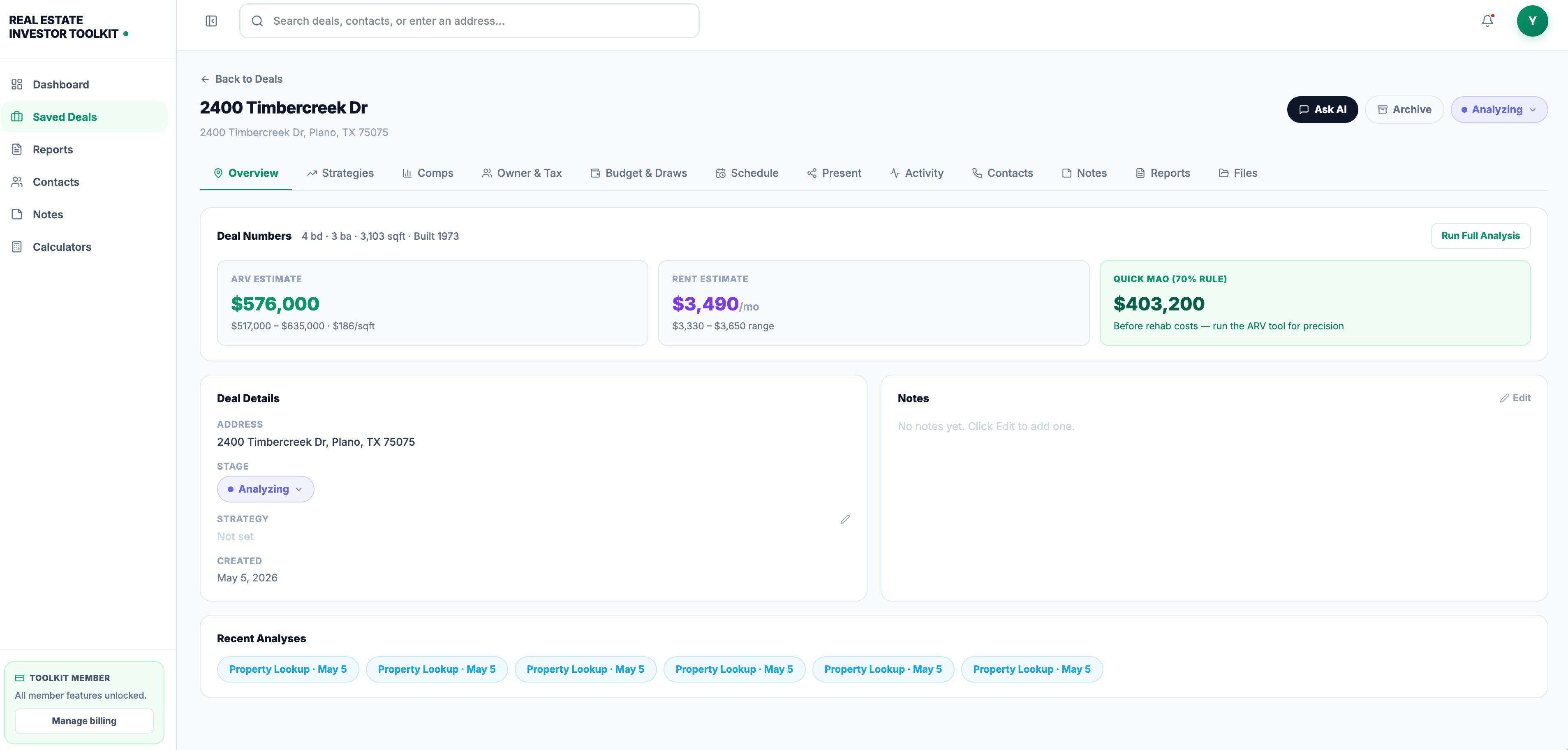
The Comps Analyzer surfaces verified comparable sales and lets you spot the condition and concession patterns that should drive an adjustment. Pair it with the Rehab Cost Calculator to turn a contractor bid into a number you can reconcile against market evidence, rather than one you just subtract from your offer. If you want the full workflow, including unlimited reports and saved deal pipelines, the Real Estate Investor Toolkit plan runs at a monthly subscription price, clearly stated by the publisher. Start with the free calculators and run your next comp set before you finalize an offer.
Sources
- Adjustments to Comparable Sales | Fannie Mae
- Considering financing and sales concessions: A practical guide for appraisers | Freddie Mac
FAQ
Do You Adjust the Comparable or the Subject Property?
You adjust the comparable, never the subject. The subject property is the fixed reference point; every dollar adjustment moves a comp’s price toward what it would have sold for if it matched the subject’s condition and terms.
What Should You Negotiate After a Home Inspection?
Repair credits, a price reduction, or seller-completed repairs on health-and-safety items like roofing, electrical, or HVAC are the most common asks after inspection. Any credit or concession you negotiate should get documented in the contract, since that same paperwork becomes the evidence an appraiser needs if your sale later serves as someone else’s comp.
What Should You Avoid Saying During a Home Appraisal?
Avoid volunteering your target value, discussing pending offers, or pressuring the appraiser toward a number. Stick to factual points about recent repairs, upgrades, and comparable sales you’re aware of, and let the market-based adjustment process do its job independently.
How Far Away Can an Appraiser Go for Comps?
There’s no fixed national mileage limit, and appraisers generally prefer comps from the same market area or neighborhood whenever enough sales exist. When local inventory is thin, FHFA’s data on comp counts shows appraisers commonly expand the radius or time window rather than force a weak match, the same principle that should guide an investor building comps for a deal analysis.
Can Real Estate Investor Toolkit Help Me Adjust Comps for Repairs?
Yes. The Comps Analyzer pulls verified comparable sales data so you can compare condition and price patterns directly, and the Rehab Cost Calculator helps convert repair estimates into numbers you can reconcile against market evidence.